 Fra Noi Embrace Your Inner Italian


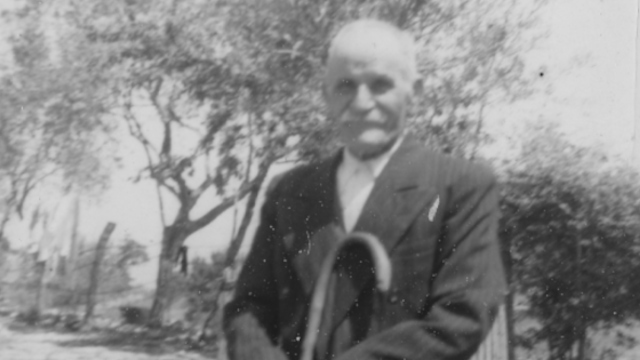
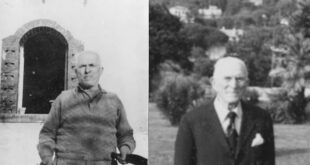
In July 1923, my future grandfather Pietro D’Epiro, 23 years old and married but traveling solo, landed in New York on the Guglielmo Peirce. The passenger list described him as 5’3’’ with a rosy complexion and chestnut hair. When I first met him in July 1960, during my family’s trip to Italy, he was a handsome and vigorous late-middle-aged man with captivating gray-blue eyes. As I write about him, I’m glancing at a framed parchment I inherited that proclaimed him a Cavaliere dell’Ordine di Vittorio Veneto, honoring him for his service in the frozen Alps of Italy during the last phases of World War I.
Throughout several protracted stints in New York City, Pietro worked as a construction laborer and sent many dollars to his wife and growing family in Italy for building the modest house he and my grandmother still inhabited. As I soon found out during that summer of 1960, my grandfather was a huge fan of New York. Many times I heard him describe the various Manhattan sites he’d worked on and the vivid life of the Big City. Proud of having participated in the construction of the Empire State Building and other skyscrapers, he considered rural Italy somewhat beneath the notice of an old Americano like himself, who still listened to U.S. radio news every evening.
In fact, on the wall right above the radio in the dining room I noticed a small glossy chart featuring likenesses of the American presidents. I don’t remember who the most recent was, probably FDR or Truman, but when Grandpa saw me looking, he pointed to Coolidge’s smiling face and said, “Keel-yu vazzarone!”—our dialect for “Quello lazzarone!” (“That scoundrel!”).
I was perplexed then but now realize Grandpa was referring to the Immigration Act of 1924, signed by Coolidge, which drastically limited the number of immigrants from Southern Europe, among other groups, and resulted in a more than 90% reduction of immigrants from Italy. Having first arrived in America in the summer of 1923, Pietro learned that the law restricted the number of Italians arriving yearly to only several thousand. Perhaps the legislation had dashed whatever plans he may have had to eventually bring his family over. Coolidge’s share in that “infamia” still rankled.
My grandmother, Luisella Ferrara, several years older than Pietro, was tall, slender and tanned. I often saw her that summer balancing on her head, on top of a rolled-up towel, a large double-handled clay jug while slowly moving over uneven terrain back to the house after drawing water from their fountain spring. The jug, called a “cannata” in our dialect, rested on a low shelf in the kitchen and kept our delicious drinking water frigid.
Though there was running water in the house, it may not have been potable, or maybe its municipal source delivered a less zesty product than their spring.
Grandma Luisella was kind and gracious but could express herself in blunt terms when her patience was being tried. In fact, both my grandmothers could. Their adult lives had been medleys of onerous rural chores, exacerbated by a major four-month battle at nearby Monte Cassino after a protracted German occupation of the area. No wonder my grandmothers shook their heads when their friends or relatives complained about mere trivialities.
I remembered when, a few years before our trip, my parents received the news in New York that Grandma Luisella’s father had died in Italy. My great-grandfather, Marco Ferrara, had also worked in New York as a young man and lived to be 93 — or was it 95? At the time, Dad first told me his favorite story about Marco. It occurred when, as a little boy, he had wanted to stay at his grandparents’ house overnight.
“Grampa Marco, please wake up, I’m so scared.”
“Uh … what? … scared? What are you scared of?”
“I’m just scared—I want my bed and my mother.”
“Tomorrow, Antonio, tomorrow you’ll see your mother. As soon as it’s morning, I’ll take you home, alright?”
“Grampa, I just can’t sleep—Grandma’s snoring . . . and I heard the Mah-mone up in the rafters!”
“We can’t go now, Antonio, it’s still dark.”
“But I have to see my mother—see her now!”
“Alright, then, let’s get dressed, Antoniuccio….”
After feeding his donkey, Marco set out on a half-hour’s jaunt through a silent starlit countryside, with him beside the mount and a gleeful Antoniuccio up in the saddle. The duo arrived at the little boy’s house when the roosters were still dreaming on their perches. Then, having snatched a few hours of sleep at his daughter’s house, Marco rode off to earn his day’s wage as a hired farmhand.
It’s no wonder a man like Great-Grandpa Marco would often say, according to my father, “Never discourage the young ones.” Though I haven’t consistently lived up to that high ideal, I always considered it worthwhile, especially given how Dad never spoke about that wise old man without a wistful smile.
NEXT MONTH: A man for almost all seasons
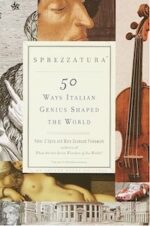 If you would like to deepen your appreciation of Italy’s magnificent achievements in literature, art, music, science, law, religion and other aspects of its civilization, consider reading my book Sprezzatura: 50 Ways Italian Genius Shaped the World. In 50 brief essays you’ll discover why, from the time of the ancient Romans to the present, Italians have been in the forefront of those who have done their work with sprezzatura — the art of making difficult things look easy. To order my book from amazon.com in paperback or Kindle, click here.