 Fra Noi Embrace Your Inner Italian


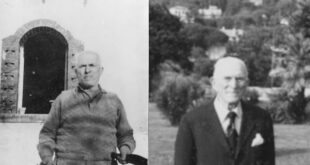
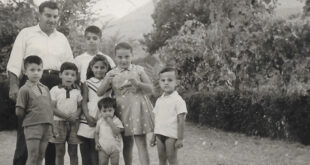
As a Bronx boy, I was intrigued by the animals on the farms of my two sets of grandparents during my family’s summer-long vacation in Italy in 1960. I enjoyed inspecting the intricate stone walls that terraced the fields on Grandpa Pietro and Grandma Luisella’s property, especially when sleek little lizards peeped out from the crevices as the day grew hotter. Often the tube-thin cats, Gatto Rosso (Red Cat) and Camicione (Nightshirt), would sneak up on a sunbathing lizard and bolt it down.
Occasionally, as per the example of one of my cousins, I would snatch a somnolent lizard from a stone wall and underhand it toward the cats, which would leap on the live tidbit, shrieking “BRRANNGGG!” They usual caught it on the fly, leaving only the green tail flickering outside their jaws, but not for long. Both of the cats seemed grateful to Fifi, Grandpa’s dainty Dalmatian, for adhering to a policy of salutary neglect toward them.
I laughed at the antics of the chickens and roosters, especially the hostile bouts that revealed their pecking order. Even the most callow rooster trumped any chicken in this order, except when a cackling hen had chicks to defend and pecked fiercely at a fleeing rooster’s butt. The huge senior rooster at Grandpa Luigi and Grandma Palmina’s wasn’t intimidated by the mother hens, yet, being the most experienced and dignified fowl on the farm — a veritable Chanticleer — he rarely sought to “ruffle their feathers.”
My favorite farm animals were the pair of sturdy black pigs at Grandpa Pietro’s. In the mornings I would summon them to their outdoor pen from their inner sanctum at the side of the barn by chanting “maiale! maiale!” as my little cousin Marcello had taught me. Hearing their call, they’d storm out of their shelter, grunting in anticipation of a feeding, even if they’d just finished their breakfast of dishwater slops.
I enjoyed watching the pigs root around in the mud for any scraps that may have escaped their attention, and I’d laugh at their thoroughness in licking clean their wooden trough. I often fed them small round potatoes left over from the previous year and kept in a big bushel in the barn, or some sickly ears of corn from a nearby field where most of it grew tall and robust. I marveled at the pigs’ powerful jaws and teeth, which can deal with just about anything, even, apparently, chickens.
I soon decided to construct a fishing-pole device from a branch to which I tied a little unripe fig. As I foresaw, the squealing pigs shoved and shouldered each other until one succeeded in rising on its haunches to snare the pathetic morsel. I confess that when I fed the pigs the little round potatoes reserved for them, I’d pitch those items at them like a fastballer. On the other hand, I also gathered special treats for them like acorns, grape leaves, fallen apples or peaches, and whatever other comestibles I found in the vicinity of the pen.
Once I even felt compelled to open the chest-high wooden gate, lock it behind me and make an inspection of the private porcine accommodations. As expected, their miry straw bedding was pungently smelly and disgustingly squishy. My pair of grunting friends knew me so well that they didn’t resent my intrusion, though they seemed down in the mouth at my faux pas of visiting their home empty-handed.
By far the largest creatures on both farms were the cows. I often saw my great-aunt Loreta, who lived with my paternal grandparents, minding their pair of cows. Sitting on a smooth boulder, Zia Loreta combed out her long gray hair and hummed some archaic tune while the cows grazed a few yards away, discouraged from straying by the sight of the long stick at my tiny aunt’s side.
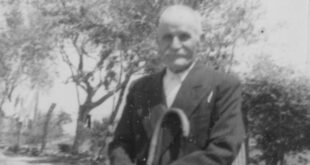
On a day when my parents were still indoors, engaged with Grandma Luisella and some noisy early-morning visitors, I was lobbing my spaldeen against the front of the house and hitting it on a bounce with a long cane stalk. Making sure to bat righty or lefty depending on who was up in the Yankees’ batting order, I would play entire games out there by assigning various gradations of hits according to how vigorously they were batted. But on that morning the game was abruptly called when Grandpa Pietro emerged from the cow barn and waved me over. He told me to take firm hold of Biancuccia’s tether and walk alongside him while he led Violetta down the sloping path toward the livestock market. There he planned to sell them and pick up two younger, more vigorous cows for plowing his fields.
You can bet my nine-year-old self was proud to manage such a powerful horned beast and help out my grandfather. After our uneventful half-hour’s walk to the market, Grandpa sold his cows but couldn’t agree on a price for buying replacements, so he planned to return in the following week to try again. When we got back ,I eagerly told my parents about my excellent adventure. Out of earshot of my grandfather, my mother said, “But what if that cow had given you a good kick? She doesn’t KNOW you.”
I considered that a far-fetched objection because I figured Biancuccia would have been — well, yes — too cowed to do such a thing with Grandpa there beside me. But then Dad chimed in.
“Everybody around here knows Grandpa, so you made people say to themselves, ‘Who’s that boy with him? Oh, that must be Pietro’s grandson who’s visiting from America. But what’s he doing with that COW?’”
Young kids are blissfully ignorant of decorum. But shrewd Grandpa Pietro must have envisioned that informing my parents of his decision to have me conduct a cow to market would have met with tedious objections, so he simply . . . took the bull by the horns.
NEXT MONTH: Snails, bikes, and an angry calf
If you would like to deepen your appreciation of Italy’s magnificent achievements in literature, art, music, science, law, religion and other aspects of its civilization, consider reading my book “Sprezzatura: 50 Ways Italian Genius Shaped the World.” In 50 brief essays you’ll discover why, from the time of the ancient Romans to the present, Italians have been in the forefront of those who have done their work with sprezzatura — the art of making difficult things look easy. To order my book from amazon.com in paperback or Kindle, click here.