 Fra Noi Embrace Your Inner Italian


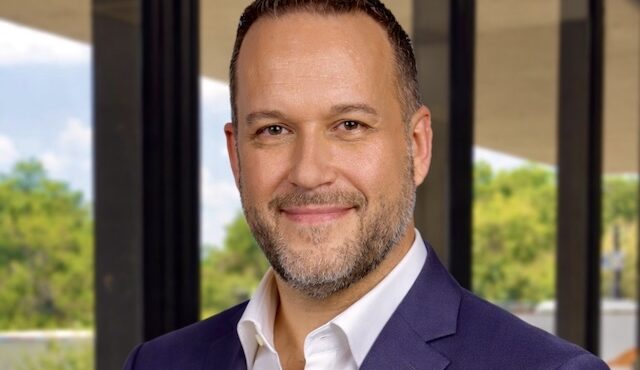
After being a fixture in the Chicago culinary scene for decades, Joe Monastero has taken his passion for the restaurant industry to a whole new level as an executive for the Texas Restaurant Association.
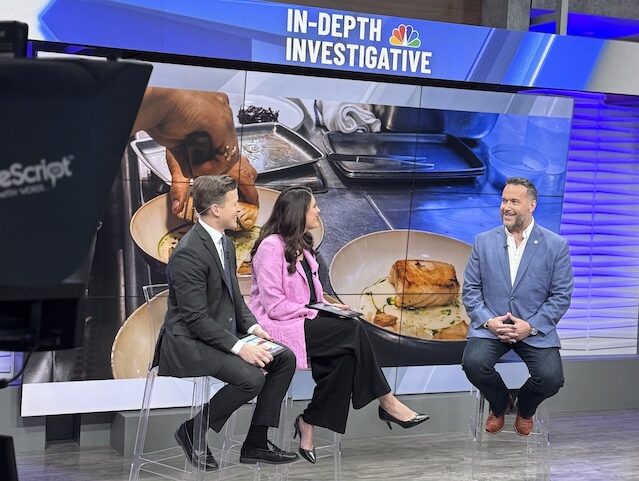
As chief revenue officer of the Texas Restaurant Association, Joe Monastero knows the Italian dining scene in Texas like few others.
Monastero also serves as trustee for the Catering Executives Club of America board (where he is past chairman and president) and is the immediate past co-chairman of the Milan-Chicago Committee of Sister Cities International.
Now residing in Austin, Texas, Monastero grew up less than a mile from his family’s now-closed Monastero’s Ristorante & Banquets in Chicago, and remains deeply connected to the city.
He talks to Fra Noi about the “satisfying and bittersweet” decision to close Monastero’s, his work experience in the culinary and education fields, and what it’s like maintaining his Italian-American cultural identity in Texas.
ELENA FERRARIN: You grew up immersed in Monastero’s Ristorante & Banquets. Tell us about your roles there and what you learned over the years.
JOE MONASTERO: Dad’s philosophy was that you had to do all jobs within the restaurant — from peeling 50 pounds of potatoes to every role within the dining room, kitchen, banquets and back office. I’m blessed to have experienced it all, because there are practical life skills that can only be learned in a restaurant. Working with my parents, uncle, sister and cousin was incredible — think “Big Night” and “My Big Fat Greek Wedding” merged with a nice, loud Sicilian and operatic soundtrack.
EF: How did it feel when Monastero’s closed in 2017 after 55 years in business?
JM: I had made my father a promise that we would go out on a high note, and that’s exactly what we did. We finished with a 55th anniversary weekend that no one will ever forget. In 55 years, we witnessed every economic twist and turn: Vietnam, the First Gulf War, 9/11, the Second Gulf War and the 2008 recession. I’m incredibly grateful that during the COVID-19 pandemic my parents could watch from home, not worrying about what we would do as business owners.
EF: You worked for Kendall College from 2010 to 2015, including as adjunct chef instructor and ending as director of strategy and global development. What was the highlight of your experience?
JM: A three-week favor to a friend turned into an opportunity to recapture my passion for the industry. I absolutely loved working with the students. The school taught traditional French culinary techniques, and I gave them a little bit of the nonconforming, passion-filled, incredibly rich elements of Italian cuisine. Also, developing relationships with key companies that supported education was an adventure. Facilitating the creation of the first U.S. culinary-school curriculum and dedicated kitchen to teach the sous-vide technique with its “founder” Bruno Goussault was incredible.
EF: You joined Study Group in 2016, ending as vice president of partnerships for higher education in North America. What was that job like?
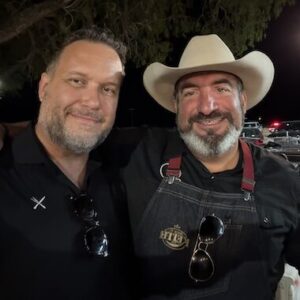
JM: My role was to promote U.S. university programs and experiences to more than 145 countries. It was challenging, fun and rewarding, and included a lot of international travel. One of the highlights was #YouAreWelcomeHere, a campaign we launched in 2017 geared at reminding international students that, no matter the political climate in the United States, all are welcome on our campuses. We received a MarCom gold award in 2017 for crisis communications management for that campaign.
EF: Why did you join the TRA in 2019?
JM: First, I was reaching almost a decade in a constant state of jet lag from all the international travel. Second, the restaurant industry is as much in my blood as my Sicilian temper or cooking being my love language. Plus, Emily Williams Knight, the TRA president, was my boss at Kendall and Study Group. She is my best friend, big sister and key mentor all in one. When she was hired for the role and there was a spot for me as well, it was like coming home.
EF: Texas is a major lifestyle change from Chicago. What was that like?
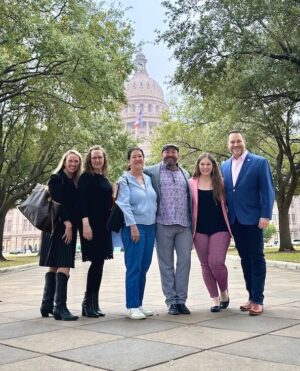
JM: After commuting back and forth, I moved to Austin in fall 2021. I came with an open mind, and it’s been a great experience. There is a lot of generalization and stereotyping about Texas. I’ve been to nearly every corner of Texas to visit the 23 chapters of the TRA, and I’ve never seen anyone outside of law enforcement with an open-carry firearm. People are incredibly warm and welcoming. They say “yes ma’am/sir” regardless of rank, status or age. There is true Southern hospitality — a climate that makes a Sicilian very much feel at home — and incredible diversity, especially in the culinary scene.
EF: What is the Italian restaurant scene like in Texas?
JM: Depends where you are! Dallas and Houston have a great Italian food scene, and small pockets of Italian immigrants at the turn of the 20th century gave way to some great spots in places like Beaumont, Galveston and Waco. Also, while not as abundant as Chicago, New York or Miami, there’s a growing influx of authentic Italian restaurants in Texas.
EF: Italian Americans represent only about 1.9% of the population in Texas. How do you maintain your Italian-American cultural identity there?
JM: I’ve had the opportunity to participate in some great events with other Italians and Italian Americans. We have a strong relationship with the Italy-America Chamber of Commerce of Texas, based in Houston, which does a superb job promoting Italian culture. Austin is missing a really good Italian grocery store, so I cook a lot to show my friends and colleagues here what real Italian food is. I also keep in touch regularly with family in Italy through Facebook and WhatsApp. Most of the work team has even gotten used to the random moment when I will answer the phone in Italian or Sicilian.
EF: In 2019, you were named Cavaliere dell’Ordine della Stella D’Italia. What did this honor mean to you?
JM: I was raised with an intense sense of duty to our culture and to helping bring an understanding to the United States of today’s Italian culture. There are so many Italian Americans of third, fourth and fifth generation who have no idea what today’s Italy is like. The work I did was not just to satisfy the expectations of my father, but also to truly help build a bridge between America, Italophiles and Italian Americans, so they can understand what being an Italian today actually means.
EF: You attribute part of your success and work ethic to the example set by your father and uncle. Can you tell us more about that and your drive to succeed?
JM: I’m pretty sure that George Lucas stole the phrase “There is no try” for Yoda from my father. We were raised to study, work hard and never accept something as enough. If you’re going to do it, do it with your whole soul, all your energy, and when you think you’ve got it right, see what you could do to make it even better.
The above article appears in the May 2026 issue of the print version of Fra Noi. Our gorgeous, monthly magazine contains a veritable feast of news and views, profiles and features, entertainment and culture.
To view a sample copy, click here.
To subscribe, click here.