 Fra Noi Embrace Your Inner Italian


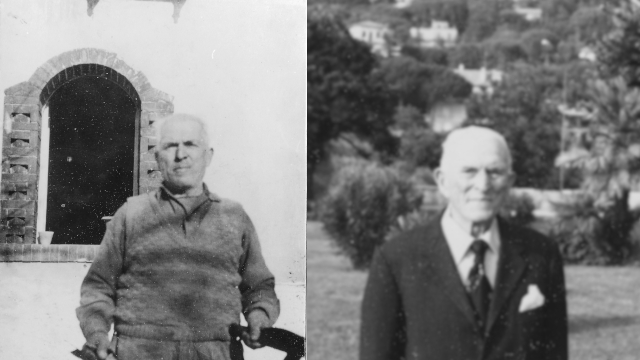
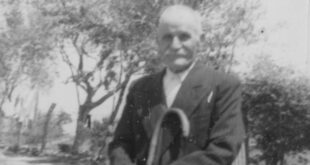
In 1905, my maternal grandfather, Luigi Ciavolella, came to this country, alone, at age 14 and went to live with his married sister in the Bronx. He soon got himself a shoeshine box that enabled him to make a quite respectable $5 a week. On Sundays, he sometimes attended the Metropolitan Opera, but on one gala occasion, when Caruso was singing, Grandpa’s fine seat cost him a full week’s earnings. Another time, the starched shirtfront he had to rent rolled up like a window shade during a performance and smacked him in the chin.
Luigi subsequently went into business as an iceman, which involved ascending many flights of stairs, many times a day, with a large block of ice balanced on a burlap sack draped over his left shoulder. A short man who began losing his hair young, Grandpa had pleasantly serene features, a sly but reassuring smile and remarkable physical strength. In his late 20s, he was drafted in the waning days of World War I and got sent to Atlanta for three months of boot camp.
After a dozen years in the ice business, he returned to his southern Lazio hometown of Esperia, where he wed Palmina Palombo, one of his stepsisters. His widowed mother had married that young woman’s widowed father while Luigi was in America, so Grandpa and his bride had never lived together, thus minimizing the incestuous overtones of the match. Grandpa’s unflustered, utilitarian and cut-to-the-chase personality caused him to look for a bride no farther afield than his own mother’s house, since her remarriage had stocked it with three or four nubile maidens.
Now Luigi decided to buy an extensive and fertile plot of level ground, among the best in the largely agrarian village, but the existing structure on the property had only two rooms: a cantina and a magazzino — basically a wine barrel room and a glorified larder. Needing more cash to build a full residence around that bare core, he sailed to New York again in 1923 to restart his ice business only a month after the birth of his first child, my late aunt Gina.
Toward the end of 1925, when he was 34, Luigi went home for good, having done his time in America like so many Italian men of his generation who opted to repatriate. With his recently earned dollars, he soon had a fine rural house built on his land, but my grandfather had been born and raised in the townie part of Esperia. That meant he condescended to learn — in a hands-on agricultural sense — only how to delicately prune his vines. True, he also loved feeding the chickens, flinging them corn kernels until they were ready to burst and laughing at how their incessant squabbles seemed like a tableau of human greed. Yet he never stooped to less amusing tasks like feeding cows or hogs — and the field that Grandpa Luigi plowed has never yet existed on planet Earth.
Instead, with his American cash, he acquired a threshing machine and an irrigation pump, which he put to good use both on his own land and that of his cash-strapped neighbors, who paid him with a share of their crops. Even to that minimal degree, he stopped working his own land — that is, retired — when he was 45, choosing to hire day-laborers for the grittiest fieldwork. The remaining rustic chores were generously reserved for his wife and four daughters. His role became that of consultant to himself, as in determining which strains of fine Turkish tobacco would flourish in his fields and how best to cultivate the grapes for his superb spumante wine.
When rheumatic disorders in middle age confined Grandpa to bed for weeks at a time, he read Dante’s “Commedia.” Four decades later (he lived to be 93) I heard him recite from memory the tragic love scene of Francesca da Rimini from that epic 14,000-line poem. He also taught several illiterate men to read in his leisurely evenings, although he himself had only four years of formal schooling. From reading classics like the novels of Dostoyevsky, Manzoni, Verga and D’Annunzio, he derived the language skills that allowed him to write a commentary on the Gospel of John and also a few dozen hymns that were eventually sung in the small Protestant chapel he built on his property. In addition, I inherited from my mother many hundreds of his letters to her, all written in a flamboyant style, of course, and signed with a larger-than-Hancock flair. Not for nothing was my grandfather nicknamed, perhaps a bit snarkily, “Luigi Sette-Cervella” (Luigi Seven-Brains).
My favorite story about Grandpa tells how he once agreed to lead a protest march to the palazzo of the troublesome local baron, which, when it got there, had gradually dwindled down to himself alone. Unfazed, Luigi knocked, was admitted, and said to the baron, who knew him well: “Continue your works of oppression — you and these cowards richly deserve one another.”
Grandma Palmina often spoke of how, in 1926, when their second daughter was born (my late mother, Virginia), Luigi’s hired masons were building the growing family their splendid home. The work had to pause for two weeks, however, while Grandma recovered from a difficult childbirth and didn’t feel well enough to prepare the men’s noontime meals, as was customary. Many years later, when I asked my grandmother why Grandpa didn’t take charge of feeding the men, she shot back:
“Cook? Luigi? Why, he doesn’t even know how to boil water!”
NEXT MONTH: Animal farm, Italian style
If you would like to deepen your appreciation of Italy’s magnificent achievements in literature, art, music, science, law, religion and other aspects of its civilization, consider reading my book “Sprezzatura: 50 Ways Italian Genius Shaped the World.” In 50 brief essays you’ll discover why, from the time of the ancient Romans to the present, Italians have been in the forefront of those who have done their work with sprezzatura — the art of making difficult things look easy. To order my book from amazon.com in paperback or Kindle, click here.