 Fra Noi Embrace Your Inner Italian


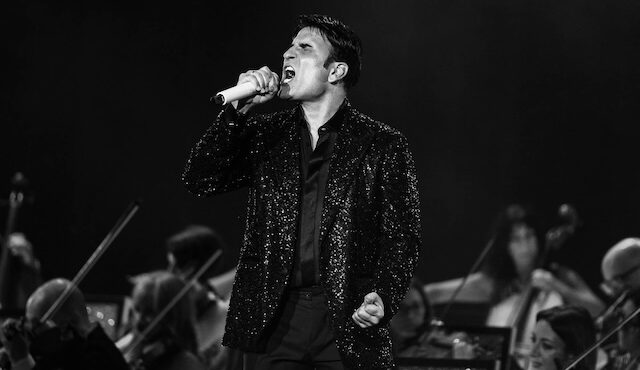
Before netting top honors at this year’s Sanremo Festival, Sal Da Vinci had been quietly amassing a loyal fan base outside the international media spotlight with his heartfelt love songs.
When Sanremo Music Festival crowned Sal Da Vinci its winner this year, it felt less like a breakthrough than a coronation long delayed. For decades, Sal Da Vinci has been one of Italy’s most beloved musical interpreters of romance, carrying the melodic grandeur of canzone napoletana into pop, theater and television. But his victory with “Per sempre sì” wasn’t simply another career milestone — it was a cultural moment.
It was March of 2025 when I first brought Sal to Chicago. He played my Des Plaines Theatre with another popular Italian star, Arisa.
When he was first introduced to me, he could not have been more endearing. Truly thrilled to be in America to perform, Sal long had a fan base in Chicago and was excited to meet them.
The show was so incredible, the crowd on its feet the entire time. Afterward, I made an extravagant dinner for the entire 30-person entourage. But due to allergies, he only had plain pasta with veggies … no garlic!
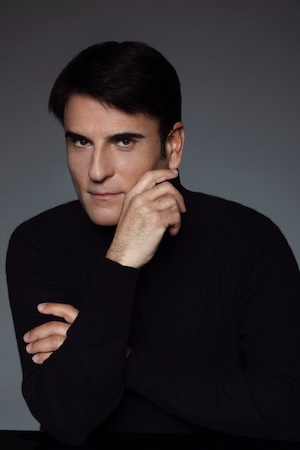 Born Salvatore Michael Sorrentino in New York during the touring years of his father, legendary crooner and actor Mario Da Vinci, Sal returned to Naples as a child and seemed destined for the stage. He performed publicly by age 6, acted in films as a teenager and moved fluidly between traditional Neapolitan music and mainstream Italian pop. Long before the Sanremo victory arrived, he had become, for many Italians, a keeper of emotional truth.
And yet, the road to Sanremo glory was anything but smooth.
“I had knocked on that door many times,” Sal said after the win, reflecting on years of setbacks before finally lifting the trophy. “This victory belongs to everyone who keeps believing.”
To understand Sal Da Vinci is to understand Naples.
His music carries the drama of the harbor, the poetry of old streets, the theatrical soul of southern Italy. Even his contemporary hits echo something timeless.
Asked in one interview what drives his songwriting, Sal said, “Everything starts from emotion. If a song doesn’t move me, it can’t move anyone else.”
That emotional directness has fueled a career spanning music, cinema and musical theater, including an acclaimed turn in “C’era una volta… Scugnizzi,” which helped cement his reputation as not just a singer, but also a storyteller.
He enjoyed another breakthrough beyond the boundaries of his longtime fans with the release of “Rossetto e caffè,” a modern classic that introduced him to younger audiences and set the stage for Sanremo.
Then came “Per sempre sì.”
A soaring declaration of devotion, the song feels almost defiantly romantic in an ironic age. Sal described it as more than a love song, calling it “a declaration without barrier” and a message of freedom and universal love.
When his name was announced as the winner, Sal dropped to his knees in tears. For many, it was one of Sanremo’s great emotional scenes.
Asked what the win meant, he framed it not as a personal vindication but in terms of gratitude.
“Sanremo is sacred for Italian music,” he said afterward. “To stand there and feel embraced by the public like this … it is something I carry in my soul.”
He also dedicated the victory to those who “make Italy beautiful, strong and triumphant,” a remark widely quoted after the final.
For Chicago’s Italian community, Sal Da Vinci isn’t just a star from afar — he feels familiar. The Windy City has long been a second home for Italian and especially Neapolitan performers, and Sal has spoken warmly about the city’s passion.
He has praised Italian-American audiences for preserving traditions “with extraordinary love,” and has often noted how deeply Neapolitan music is felt in cities like Chicago.
His upcoming North American appearances are being framed as celebrations of both his Sanremo triumph and his connection to Italian communities abroad.
In discussing overseas audiences, he has often pointed to Chicago as a city where “they sing every word back to you.” For an artist shaped by communal singing and shared emotion, there may be no higher compliment.
One can imagine him loving Chicago for reasons beyond heritage: It’s a city of neighborhoods, memory, food, old souls and big voices — not unlike Naples. There’s a kinship there.
Yes, he honors tradition. But his best work doesn’t feel trapped in the past; it feels timeless. He bridges generations. Grandparents know him. Their grandchildren stream him.
That’s rare.
Asked how he views himself now, after Sanremo, he reportedly answered with humility: “I feel like I’m still learning.” That may be why audiences trust him.
Much of Sal’s story circles back to family. His father’s musical patrimony looms large in his artistic DNA. Yet Sal has never seemed burdened by legacy: He extends it.
After decades in entertainment, he still radiates gratitude rather than entitlement. That may be his quietest superpower.
“Per sempre sì.” The title of his winning song means “Forever Yes.” It could double as a career philosophy.
For an artist who spent years building a fan base outside the international media spotlight, the Sanremo victory introduced him to the wider world in a big way.
Yet Sal Da Vinci doesn’t feel newly made. He feels newly recognized. And maybe that’s sweeter.
As he prepares for larger global stages and adoring diasporic audiences in places like Chicago, he seems less interested in triumph than connection.
That, ultimately, may be why he endures. Not because he sings about emotion, but because he sings from it.
When asked what winning Sanremo felt like, his answer was simple: “A dream,” he said, “but one built with many years of truth.”
Yes, Sal Da Vinci returns to Chicago this summer, and it is sure to be epic. What was a dream for him a few months ago will be like a dream to many, as he brings a full two-hour show back to town. It will be traditional, contemporary, upbeat and tender.
Sal Davinci, Pooh, Eros Ramazzotti, Laura Pausini, Fausto Leali … the list of musicians from Italy coming to Chicago continues to grow. Keeping that music alive will help keep Italian culture alive.
Of course, so will the food, fashion, autos, art, music, etc., etc., etc.
For more, click here.
The above article appears in the June 2026 issue of the print version of Fra Noi. Our gorgeous, monthly magazine contains a veritable feast of news and views, profiles and features, entertainment and culture.
To view a sample copy, click here.
To subscribe, click here.