 Fra Noi Embrace Your Inner Italian


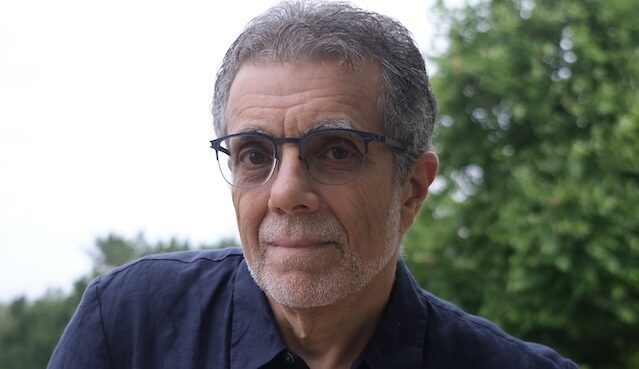
The former CEO of America’s largest bookseller found himself championing an obscure Italian novel in his retirement.
 Stephen Riggio believes it was his destiny to translate Luigi Natoli’s epic Sicilian novel, “I Beati Paoli,” into English.
The former CEO of Barnes & Noble spent three years immersed in the project, whose roots trace back to the passing of his daughter Melissa.
“From that tragic event, I returned to the study of the (Italian) language, visited Sicily four times, traced my family’s roots back 400 years, discovered distant relatives, translated a classic work of literature and published it the day before I turned 70 years old,” he recounts.
 Natoli — a native of Palermo, Sicily — was a teacher, journalist and historian who published more than 25 adventure and historical novels. Written between 1909 and 1910, “I Beati Paoli” was published in installments under the pseudonym William Galt in the Giornale di Sicilia.
Set in early 18th century Sicily, the novel centers around a real-life sect of hitmen and avengers that has been described as a forerunner of the Mafia. The plot incorporates historical figures such as Girolamo Ammirata, who has been identified as an actual member of the sect, according to Riggio.
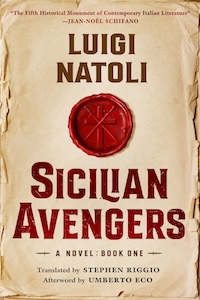
Published in two volumes and dubbed “Sicilian Avengers,” Riggio’s English translation of the novel was released in October.
“‘Sicilian Avengers’ will appeal to readers on many levels,” he says, describing it as a big, epic adventure story. “Its action scenes are reminiscent of the adventure novels of Alexandre Dumas; its plot is full of intrigue and the machinations of unfettered power as in Hilary Mantel’s Tudor trilogy; its story about a secret sect will appeal to readers of Dan Brown’s ‘Da Vinci Code.’” he says. “And there’s a love story as well.”
Riggio’s passion project started after his daughter Melissa lost her battle with leukemia at age 20 in 2008. Riggio and his wife have two more daughters, Laura and Christina.
“I was searching for something to do with my wife, Laura, to fill the huge hole that had opened in our lives. I came up with the idea of taking Italian lessons together,” Riggio explains.
Several years into their lessons, their Italian teacher gave them Natoli’s novel to read. Riggio, whose paternal ancestors are from Sicily, says he was drawn into the novel by its sweeping narrative.
“After diving into the story and learning it had never been translated into English, I told her I was going to translate it,” Riggio recalls. “After finishing the novel with my wife and with our teacher’s encouragement, I turned what began as a homework assignment into a three-year translation project.”
The central theme of injustice in “Sicilian Avengers” will resonate with modern-day readers because it is timeless, Riggio says.
“It principally revolves around an injustice perpetrated by an aristocrat against an innocent individual,” he says. “But there are other layers to the story: the injustices of an aristocracy of awesome power and privilege that preys on the commoners; the injustices of the Church, still performing horrific tortures as part of the Inquisition; the injustices of the great powers of Europe that toss Sicily about as a pawn in their own great game.”
Growing up in the mostly Italian American neighborhood of Bensonhurst, Brooklyn, Riggio’s first exposure to the Italian language came from his maternal grandmother, who spoke Sicilian and Italian and read to him from the Italian American newspaper Il Progresso. Riggio studied Italian in junior high and high school but did not continue in college.
His was a close-knit family, proud of being Italian American, he recalls.
Riggio’s father, Stephen Riggio, was a professional boxer in the late 1930s and early 1940s who twice beat Rocky Graziano. He later drove a taxi for 17 years and also worked at the main Barnes & Noble store in New York City’s Greenwich Village after it was purchased by his son Len.
Riggio’s mother, Pasqualina Capuccio, was a homemaker who sewed decorations for the weddings of the children of family and friends.
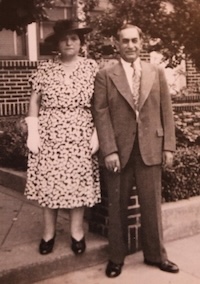
“My upbringing was typical of most children of second-generation Italian American parents, whose parents wanted their children to become American and that certainly flowed down to my generation,” he says. “My paternal grandparents never went back to Sicily. My parents did not visit Italy until they were in their 50s. While my Sicilian grandmother spoke Sicilian and Italian, my parents hardly spoke the language. But we were proud of our Italian ancestry and kept many traditions alive.”
Encouraged by his parents, Riggio was always a voracious reader.
“I read every night,” he recalls. “I loved adventure stories, big novels: Hugo, Dickens, Dumas, H.G. Wells, Jules Verne. Later on, Huxley, Orwell, Vonnegut, Ian Fleming, Roth, DeLillo, Updike, Austen. I especially enjoy reading history that has a big narrative sweep, like Tuchman, Mattingly and McCullough.”
In fact, books have “absolutely” been central to his life, he says.
“I am fairly catholic in my reading tastes, but tend to do a deep dive into a subject when I get hooked. Right now, that’s World War I.”
He also reads crime fiction for enjoyment, especially the novels of Andrea Camilleri and Donna Leon, he says.
As a high schooler, Riggio began working in his brother Len’s first bookstore, before he bought Barnes & Noble. After graduating from Brooklyn College with a degree in anthropology, he joined the Barnes & Noble company in 1974.
“I loved the idea of serving people,” he explains. “Bookstores are incredibly stimulating environments; I call them ‘amusement parks for the mind.’ We were always doing innovative things. It was exhilarating.”
Through the years, Riggio worked his way up in the company.
He was appointed executive vice president of Barnes & Noble’s direct mail division in 1981. After the company acquired B. Dalton Bookseller in 1987, he became president of the new division, which operated more than 700 nationwide stores.
When the company went public in 1993, Riggio was appointed chief operating officer and joined its board of directors.
In the 1990s, Riggio led the company’s transformation from small format B. Dalton shopping mall locations to large Barnes & Noble superstores. He became CEO in 2002.
Riggio attributes the success of the bookstore giant to its innovative approach.
“We expanded the markets for books like no other company in history, democratizing bookselling, bringing books to communities that never had access to a large well-stocked store with passionate, knowledgeable staff,” he says.
Deeming four decades in the industry “a good run,” Riggio retired in 2012.

“After the loss of our daughter, I decided it was time to move on with my life and explore new opportunities. I had no specific plans, but it does seem like this translation project was waiting for me.”
Learning Italian with his wife proved to be fulfilling on many levels, he says.
“We’ve not only enjoyed learning the language but have taken over a dozen trips to Italy. It was not until my first visit to Sicily in 2013, when I was 59, that I began an earnest search into my Sicilian ancestry — with excellent results!”
His family rarely talked about ancestry when he was young, and they didn’t keep records of birth, marriage or death. Discovering one’s roots so late in life brings enormous pride, but also regret, Riggio says.

“I wish I had taken the initiative to do a deep dive into my ancestry years ago, but better late than never,” he says. “I’ve not only learned a great deal about our family’s roots in Sicily, but have discovered distant relatives with whom we have developed a special bond. And I’ve read dozens of books on Sicilian history, giving me a greater knowledge of Sicily’s history and appreciation for the island’s rich culture.”
His hope is that his English translation of “I Beati Paoli” spurs an interest in Sicily, he says.
“It’s a glorious, picturesque island with wonderful people. And it is perhaps the most multicultural place on earth. After all, it has been invaded for over two thousand years by Phoenicians, Greeks, Romans, Arabs, Normans, Spaniards … The effects of these colonizations can be seen everywhere, in its architecture, language, food. And Natoli’s novel is practically a guidebook to the city, since so many of the churches, buildings and places still exist as he depicted them.”
The article above appears in the August 2025 issue of the print version of Fra Noi. Our gorgeous, monthly magazine contains a veritable feast of news and views, profiles and features, entertainment and culture. To subscribe, click here.