 Fra Noi Embrace Your Inner Italian


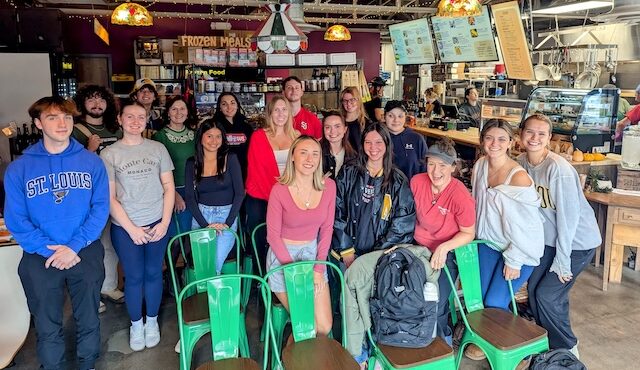
If she hadn’t trusted her instincts, Carla Cornette would have never embarked on the circuitous path that eventually led her to find her life’s passion: teaching Italian.
In fact, that’s precisely her advice for young people. “Listen to your gut!” she says. “If you’re passionate about something, follow that and make it work.”
A native of Lexington, Kentucky, Cornette is the director of undergraduate studies for the School of Languages, Literatures, and Cultures at the University of Missouri, where she also teaches Italian.
Cornette has taught at the University of Missouri (nicknamed “Mizzou”) for the last three years after teaching for four years at Pennsylvania State University and one year at The Ohio State University.
Growing up, Cornette took formative AP language classes, in particular with a high school French teacher who balanced rigor with fun and creativity. She had considered becoming a French teacher in high school, but was discouraged from majoring in languages in college, so she went on to earn a bachelor’s degree is in biology from Transylvania University in Kentucky and attend medical school for two years.
Then, after “life events” changed her path, she ended up moving to Italy in 2009 with her then 8-year-old son to study at the Università per Stranieri (University for Foreigners) in Perugia. She had exhausted all the Italian courses at the local universities in Virginia, and wanted to continue pursuing her passion, she explains.
After obtaining an advanced diploma in Italian language and culture in 2010, she applied to Middlebury College’s master’s in Italian program, which mostly takes place in Firenze.
“It was an amazing year as well and set me on the path to eventually become a professor of Italian,” Cornette recalls. “The experiences living and studying in Perugia and Firenze were transformative, and set me on the path to keep studying.”
She also credits her mentor, Professor Ernesto Livorni, with encouraging her to pursue a doctorate in Italian Studies.
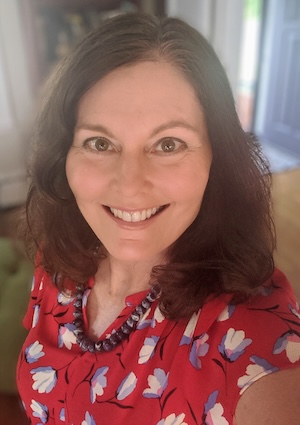
Cornette earned a Ph.D. in Italian from the University of Wisconsin-Madison in 2018 with a specialization in contemporary Italian literature, specifically postcolonial works. Her dissertation focused on novels and memoirs written by Black Italian women authors and the psychopathology (depression, eating disorders, and the like) that manifested in the narratives.
The research was life-changing, she says. For example, she learned about Italy’s citizenship law (which is based on descent, not birthplace), and about the limited rights of immigrants born in Italy.
“There are around a million Italians, individuals born and/or raised and educated in Italy to immigrant parents, who are rendered strangers in their own homeland due to this law,” she says. Also, non-white people are often commonly presumed to be ‘Other’ and not Italian, even if they have lived in Italy their entire lives, she says.
On the positive side, there are Black Italians who are scholars and artists (for example, Sayf, a young Tunisian-Italian, who won second place at this year’s Sanremo Music Festival), and activists who are lobbying to recognize the multiculturality of Italians and correct the injustices of the country’s citizenship law, she says.
One of the new courses Cornette created at Mizzou is “Black Italy: The Politics and History of Race in Contemporary Italy,” whose curriculum she has presented in various educational and conference settings, such as the Italian Embassy, the Black Europe Summer School in Amsterdam and the American Association of Teachers of Italian.
Mizzou’s School of Languages, Literatures and Cultures is an innovative and exciting place to work, she says. “We are always thinking about new and interesting courses to offer, ways to provide opportunities for students to use their language skills, whether in internships locally and abroad, as well as how to make our language courses relevant for students when they get out on the job market.”
For example, her Italian students build an electronic portfolio to showcase their language skills, and have the chance to spend five educational weeks every summer in Sicily, a program that Cornette built. Another course Cornette created at Mizzou is “Sicily: Crossroads in the Mediterranean.”
Cornette says she loves to be able to spend her days teaching the language, culture, history, literature and cinema of Italy, although time management is always a challenge. “There is always more to be done, and more that I want to do! But it’s also important to carve out time for physical and emotional well-being.”
In her free time, she loves to dance — she takes Zumba lessons and recently developed an interest in contra-dance — gardening and cooking.
“Staying in touch with my three grown children who live in Boston and Denver is also very important to me,” she adds. “They are my heart!”
As for her the future, she’s right where she wants to be, she says. “I plan to continue sharing my passion for Italian language, culture, literature and film with Mizzou students for the rest of my career! Eventually, I wish to retire in Sicily, but will probably keep teaching and learning in some fashion.”