 Fra Noi Embrace Your Inner Italian


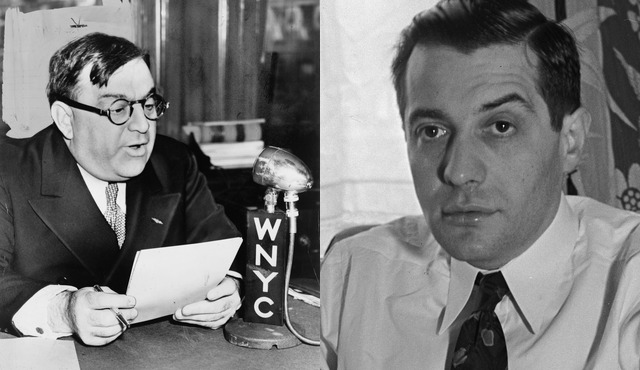
Yesterday I read about an Italian-American neighborhood that was the original Little Italy in New York City. No, not Mulberry Street in lower Manhattan but East Harlem above 96th Street. Today, both those areas are “Italian” by the skin of their teeth. Mulberry Street is enveloped by Chinatown. East Harlem is better called Spanish Harlem (nicknamed El Barrio) for the massive influx of Puerto Rican and Dominican residents after World War II.
What I was reading was an article in Atlantica Magazine from July 1934. No food or fashion, Atlantica was probably the first intellectual periodical in our community. The article was written by a young Peter Sammartino, who founded New Jersey’s Fairleigh Dickerson University in 1942. (Today, the university offers over 100 degree programs, has 13,000 students on two New Jersey campuses, one in Canada and one in England.)
In his commentary, Sammartino espoused the need for an innovative high school in East Harlem, citing “one of the highest crime rates in the country.” In fact, the Genovese gang was founded there and both the Mafia-Camorra War (1915-1917) and the Castellammarese War (1930-1931) depicted in “The Godfather” were mainly fought there. Sammartino and his generation knew that aimless Italian-American youth in East Harlem were recruited by these thugs.
Into the 1950s, even I can recall the scourge of juvenile delinquency that plagued New York City. It was the basis of “West Side Story”: the “American” Jets vs. the Puerto Rican Sharks. The authors shifted the battleground from east to west Manhattan and Americanized the Jets, whose leader was “Tony.” There may be some question about this, but the show reflected the agony of New York’s changing neighborhoods, especially East Harlem.
In its Italic heyday (1878-1950s), East Harlem, with a population of 300,000, produced politicians Fiorello LaGuardia and Vito Marcantonio. It’s still home to Rao’s Restaurant (opened in 1896) and Patsy’s Pizzeria (1933), pioneer of the N.Y.-style thin crust. Also still an Italic enclave is Our Lady of Mt. Carmel Church (est. 1884), which serves the spiritual needs of the remaining 1,000 or so Italian Americans. These dedicated parishioners continue the traditional Giglio (“Lily”) Feast, started in 1908, during which a four-ton, seven-story statue to St. Anthony is lifted.
Another product of East Harlem was a generation of ambitious kids who embraced the public school system that their mischievous fellows rejected and went on to attend the local college on the west side of 116th Street — Columbia University. Not only within walking distance, it was also named for one of Italy’s greatest sons. These boys formed a club at the university, il Circolo Italiano, and petitioned the university president for an Italian cultural center on campus. He agreed to furnish the land if they could finance a building. The wealthy Paterno family heard their plea and La Casa Italiana, a 30,000-square-foot, six-story building, was opened on Columbus Day 1927, dedicated in person by inventor Guglielmo Marconi.
Student Peter Riccio was the driving force in this effort, and he acknowledged the inspiration derived from then-lauded Fascist Italy, even writing his doctoral thesis on the regime in 1929. However, by 1940 Riccio rejected what Italy had become and managed to be appointed director of La Casa in 1957.
I find it fascinating that this one neighborhood produced not only the Columbia whiz-kids and some of New York’s notorious criminals but also LaGuardia, one of America’s best mayors, and seven-term Congressman Vito Marcantonio. The Bernie Sanders of his time, Marcantonio was a progressive/socialist and even more controversial. He embraced diversity to the point of angering some of his Italic constituents with his zealous advocacy for Blacks and Puerto Ricans. He called for an independent Puerto Rico and reparations for American colonial exploitation of the island. But ultimately, he was a champion and voice of all his poor and struggling constituents, regardless of ethnicity. Hollywood would love his story.
How many such neighborhoods does our national community have? There is so much that we take for granted.
The above article appears in the June 2026 issue of the print version of Fra Noi. Our gorgeous, monthly magazine contains a veritable feast of news and views, profiles and features, entertainment and culture.
To view a sample copy, click here.
To subscribe, click here.