 Fra Noi Embrace Your Inner Italian


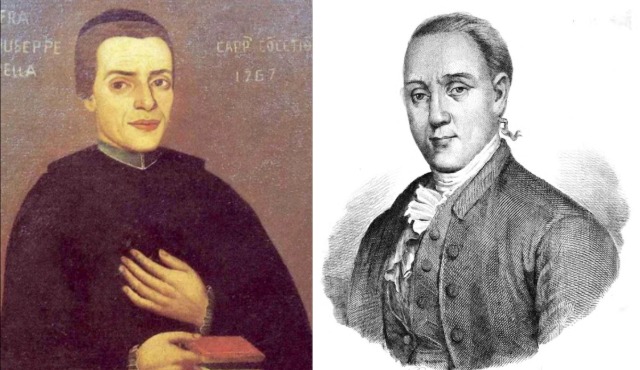
In late 18th-century Palermo, beneath the glare of the Sicilian sun and the shadow of Baroque palaces, power rested on a fragile mixture of absolutism, clerical privilege and historical myth. It was here that Giuseppe Vella, a Maltese abbot attached to the Benedictine abbey in Monreale, carried out one of the most audacious intellectual scams in Sicilian history. Claiming to translate ancient Arabic manuscripts, Vella fabricated texts that rewrote the island’s medieval past in ways that conveniently served Bourbon rule and ecclesiastical interests.
The forgery — later known as the Council of Egypt — suggested that many aristocratic privileges had no legal standing under earlier Muslim governance. This “discovery” allowed Bourbon authorities to weaken feudal claims and centralize power. Vella was richly rewarded: prestige, income, housing and, in 1785, the first chair of Arabic at the University of Palermo by the Archbishop. When the fraud was exposed, he escaped serious punishment. Too many powerful figures had benefited from the lie, and silence proved more useful than justice.
At the same moment that history was being falsified from above, a small group of Sicilians sought to change it from below. In 1795, Francesco Paolo Di Blasi, a jurist steeped in Enlightenment thought, led a conspiracy to overthrow Bourbon rule. Di Blasi’s model was English constitutional government: an independent Sicily governed by law, with limits on sovereign power and civil liberties and an end to torture and arbitrary justice.
These events form the historical core of Leonardo Sciascia’s 1963 novel, “Il Consiglio d’Egitto.” Born in 1921 in Racalmuto, a sulfur‑mining town, Sciascia built his literary career on inquiry, using fiction to expose the mechanics of power, corruption and historical amnesia. A rationalist and anticlerical, he later served in the Italian and European parliaments, critiquing authority until his death in 1989.
The novel unfolds in the Bourbon Kingdom of the Two Sicilies as revolutionary ideas spread across Europe after 1789. Sicily simmered with resentment. Heavy taxation, feudal privilege and the Church’s deep entanglement with the crown weighed heavily on the population. Vast ecclesiastical estates consumed vineyards, rivers and tuna fisheries — an economy locked away from reform. Viceroys such as Filippo López y Royo embodied distant, imported authority.
Against this backdrop emerges Giulio Tinaglia, a blacksmith drawn into Di Blasi’s circle by Enlightenment ideals. Long assumed by many readers to be fictional, Tinaglia is documented in the records of Palermo’s Gran Corte. Alongside fellow conspirators Benedetto La Villa and Bernardo Palumbo, Tinaglia — and possibly his brother Giovanni — plotted to seize the viceroy and proclaim a new government.
The conspiracy unraveled through betrayal and confessions extracted under torture. Arrested on March 31, 1795, Tinaglia and the others were subjected to the corda, a brutal method that dislocated the shoulders by hoisting victims from their hands tied behind their backs. Yet, as Sciascia writes, they did not speak, they held firm: non hanno parlato, hanno tenuto. Tenere suggests endurance rather than mere silence: the refusal to yield even when the body breaks.
Di Blasi, as a noble, was granted death by decapitation. Tinaglia and the others, of humbler status, were condemned to the gallows. On May 20, 1795, they were publicly hanged in the Piano di Santa Teresa, today’s Piazza Indipendenza. The execution was staged as a warning: Reform would be answered with humiliation and death.
The contrast is merciless in Sciascia’s novel. Vella, the forger, thrives. Tinaglia, who refuses to lie even under torture, perishes. Power protects useful falsehoods and destroys inconvenient truths. The people — largely excluded from Enlightenment ideals — remain spectators, dooming the conspiracy and inaugurating a familiar Sicilian cycle.
That cycle would repeat itself in the uprisings of 1820 and 1848, when demands for constitutional government were crushed. Only in 1860, when Garibaldi’s Redshirts swept the Bourbons from the island, did the struggle reach a decisive turning point.
“Il Consiglio d’Egitto” is not a novel of triumph but of endurance. In a world of lies, endurance is victory.
The Tinaglia family motto? Chi la dura la vince. (“He who perseveres wins.”)

Why freedom is NEVER free and has been fought for throughout the centuries in many countries and why many have died for it. Meanwhile, those of us who didn’t have to fight for it should remember this and be grateful. Rosalie Maiorca