 Fra Noi Embrace Your Inner Italian



I was almost 11 years old when I first saw the announcement of the election of a new Pope. I didn’t know of any of the Cardinals except Cardinal Cody of Chicago, so the announcement of Cardinal Albino Luciani of Venice was not a surprise or shock. The media did not pick him, so they were shocked and surprised.
The real surprise and shock came 33 days later when my father tried to get me up to go to school and I didn’t want to get up, and he told me that the Pope had died and I probably swore and said “That was last month!” “No the NEW Pope died!”
You never saw anyone get out of bed so fast!
Then the shock and surprise that they chose a Cardinal from Poland. I am part Polish so there was great pride that one of “my own” was elected.
What we knew right away is that 455 years of Popes born in Italy had ended with the election of Cardinal Wojtyla. What we didn’t realize at the time is that it is now almost 50 years since an Italian had been elected Pope. The church has sent Cardinals to many new places around the world, and the former dominance of Italian Cardinals in persuading the others to choose one of their own seems to have ended.
The announcement of a new Pope is always a moment of great joy, anticipation, and typically surprise. I was able to watch as Pope Benedict and Pope Francis were announced and gave their first speeches and blessings to the world.
But nothing surprised me more than the announcement in May.
“Eminentissimum ac Reverendissimum Dominum, Dominum … Robertum Francescum”
Who the heck was this? Australia? Great Britain? What part of the world did they go to THIS time??
“Sanctae Romanae Ecclesiae Cardinalem … Prevost”
Hmmm, France? I never heard of this guy!!
Then the EWTN commentators erupted. “He’s from Chicago!!!”
I shrugged: Must be a mistake. Didn’t sound like Blase Cupich to me.
“We have an American Pope! They said that would NEVER happen!”
As the researchers tried to figure out who Robert Francis Prevost is, the confusion began.
By now, everyone knows he spent most of his career as an Augustinian, worked in missions in Peru, then was named a Bishop in Peru, then came back to Rome to be in the Curia, and became a Cardinal only two years ago. That’s a very short time to be known by 133 voting Cardinals from 71 different nations!
I don’t recall anyone asking about the new Pope’s ancestral lineage before. Cardinal Bergoglio (Pope Francis) was born in Argentina but his father had been born in Italy, and that was about it. But when you have a North American-born Cardinal elected Pope, the first question is “Where is his family from?”
Boy did that start the questions.
“We think he’s Franco-Italian.”
“Both of his parents were born in Chicago, we think.”
It seemed like no one knew for sure.
Well, I do not claim to be the most renowned Chicago-Italian genealogist on the planet. Far from it. However, since it is unlikely another Pope born in Chicago with possible Italian ancestry will be elected in my lifetime, I thought this was a project worthy of my experience, and I hoped I would be the one to break the brick walls that were blocking most of the others who wanted to be the first to show Robert Prevost’s ancestry.
A number of genealogists immediately worked on the maternal side. Mildred Martinez Prevost was born in Chicago to a family from New Orleans. Her father was born in the Dominican Republic while it was controlled by Haiti, and her mother was listed in the census as mulatto or black. The Pope’s maternal grandmother has grandparents who were mixed-race.
Meanwhile, a lot of genealogists, myself included, tried to connect the paternal line to Italy. How cool it would be if the new Pope were a Chicago-born Italian!
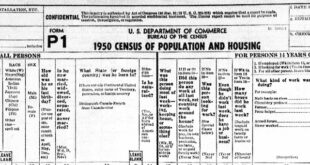
I first started looking for census records of the grandparents, John and Suzanne Prevost. In 1950, the census said John was born in Italy and Suzanne in France, which matches up with the “Franco Italian” initial analysis that first hit the press after his election. The 1950 census also had the Pope’s uncle born in 1917 in New York, so I naturally presumed they were not in Illinois yet.
But when I looked for the 1920, 1930 and 1940 censuses, the family was not listed. I tried every method of searching. How badly could they misspell Prevost? I looked for other documents that might establish their residence as close to those three census years as possible. The best I found was the World War II draft cards of the Pope’s father and uncle. Their father was listed as the nearest relative, living on 5465 S. Ellis Ave. in Chicago. Since the indexing of the 1940 census must have been messed up, I had to find this family by looking for the census enumeration district that included this block, and then read everyone’s name and find that address. I located the district using a wonderful web site called www.alookatcook.com which brings up Chicago maps and helps you figure out the census district based on the address.
I go to FamilySearch and find the right district, with 30 pages of names. I read through the entire set, and even though they had people living on the 5400 block of South Ellis, on the odd-numbered address side of the street, there was no one listed at 5465. The number was not written on the census page, and no names looked like the Prevost family anywhere nearby. I kept reading all the names, and some leftover names at the end of the district (presumably houses where no one was home when the census taker came to call) but there was nobody to be found. It’s not a complicated family. “John, Suzanne, John and Louis.”
I checked 1920 and 1930 the same way, with no luck.
Next I looked for a citizenship application for either John or Suzanne. I found John, but only as a witness to someone else’s naturalization. I checked under maiden names etc. No dice. Maybe they were citizens in New York, but nothing turned up there either.
As much as I would like to claim Pope Leo as a part-Italian from Chicago, a single census from 1950 is, frankly, insufficient evidence.
I wrote on Facebook to my genealogy pals, who are some very well known local speakers and researchers, asking them what I had failed to do in my search. It didn’t bother me to not find it, if nothing was there to find. But if my method was incomplete, I wanted to find out how.
Most of them made suggestions, which I had already tried. E for effort.
The FamilySearch “Family Tree” was next — what had other people found? Maybe they heard a TV interview with one of the Pope’s brothers that gave a clue. All I found was an Italian birth date somewhere in Torino, for someone named Giovanni Prevosto. The date was close to the birthdate that appeared on John’s death certificate, and it was Prevosto, so this must be it.
But no one had any document in the United States that firmly showed John/Giovanni Prevost was born in Torino, or anywhere else, and who his parents were. This was circumstantial at best, and guesswork at worst.
One of the issues of FamilySearch Family Tree is that anyone can edit a record, and someone put Torino, then someone else deleted it, saying “no evidence”, then someone else would put it back, etc. Everyone was arguing about it, but no one had the breakthrough. Someone even put the Torino birth info on John’s FindaGrave record, and others used that as evidence of his birth for FamilySearch.
Since no one had found the paternal Italian lineage, some people presumed that the Italian must have been somewhere on his mother’s side. But the records in Louisiana are fairly accessible and complete, and no one really found anything but Louisiana, and France, plus the maternal grandfather being born in “Haiti”. Five days into the Papacy, there doesn’t seem to be any more evidence of Italian ancestry on the mother’s side than on the father’s. Some folks presumed that since his mother’s family came from New Orleans, there MUST be Sicilian blood. But almost all of the New Orleans ancestors were traced back further in New Orleans, or back to France. One ancestor died in 1891 and his death certificate said that his parents were “born in Cuba”. And of course the Haitian.
I spent an evening with my local colleagues at the FamilySearch center working exclusively on this. I hoped one of them would be detached enough to come up with a search strategy I had not thought of yet. They came up with search strategies I had already tried, so I had to try them all again to prove to them that it seemed like a good idea but had already failed. Five of us together couldn’t break the case.
At this point, I am feeling like I’m out of my depth, because my years of experience should have helped me think of ways to find some other paper or evidence.
Then a well-respected colleague popped up on Facebook and told me that a group of 15 researchers had solved the problem.
I felt a little genealogist-envy at first, and I wanted to read their conclusion and explanation and see if I could punch holes in their theory. But I couldn’t.
It was so simple, I’m upset I didn’t think of it myself.
They saw on the son’s draft card, on the 1950 census, and on the father’s death certificate, that John Prevost was a foreign language teacher at a private school downtown. Since it was a private school, one would think there would be an advertisement in the newspapers. They looked in the Chicago Tribune archives and found Prevost Language School.
Then they found “Riggitano-Prevost Language School” a few years earlier.
Then they found “Riggitano Language School” a few years earlier than that.
Okay, maybe some teacher named Riggitano partnered up with some guy named Prevost, and eventually Riggitano sold his half of the school to John Prevost. Makes sense, right?
They started looking for Riggitano in the newspapers and bumped into a scandal about the Foreign Language teacher having an affair with a French woman……turns out it was Suzanne, the Pope’s paternal grandmother!
Without getting into the details, the researchers now searched for the link between Giovanni Riggitano and John Prevost. They finally found it in an alien registration paper, which lists his name as John Riggitano Prevost, and said he entered the USA as “Salvatore Giovanni Riggitano Alioto”. Hmm Alioto. This is the first discovered document (and perhaps the only one) where it is established that Riggitano and Prevost were one and the same person.
Now they had a birthdate on several documents, a full Italian name, and a way to look for a passenger list. The alien registration showed his birthplace as Milazzo, Messina, Italy. Someone looked for a birth of Salvatore Giovanni Riggitano (who is Alioto?) in the birth records of Milazzo, and found him there, June 24, 1876, father Santi Riggitano, mother Maria Alioto. Ahh!
This group of 15 people combined to write a 14-page report of their findings.
How did he pick the name Prevost? Simple! John’s wife Suzanne’s mother was a Prevost.
Conclusion: I don’t know how anyone would have found this if John had not been owner of this foreign language school. Without the school name change, no one would have connected Riggitano with Prevost and found the other documents. Maybe they would have tried the alien registrations looking for Prevost. The newspapers probably would not have covered the scandal if Giovanni Riggitano was not a prominent businessman. If he was a janitor somewhere who changed his name, we might still not know.
Even though my family doesn’t come from Messina, and the maternal Italian connection is still to be determined or refuted, a long-delayed feeling of pride that I share a connection with the new Pope.