 Fra Noi Embrace Your Inner Italian



What’s in a name? More than you know, actually. More than I know.
Today’s journey shows us that names are not consistent, even though we would hope they are. I hope I am able to explain how you should make decisions regarding names, even when they aren’t 100% perfect.
Here are the traditional rules for naming children:
Rule 1: First son is named for his father’s father.
Rule 2: First daughter is named for her father’s mother.
Rule 3: Second son is almost always named for mother’s father, except when there are two grandfathers with the same first name. They won’t name the second son and make a duplication.
Rule 4: Second daughter is almost always named for the mother’s mother, with the same exception.
Rule 5: If a baby in the family dies, the next baby of that gender usually is named for the deceased one. So you can have two, three or more Vincenzos in the same family. That’s a tip-off that the earlier Vincenzo had died. Look for a death record between the first Vincenzo’s birth and the second Vincenzo’s birth.
Rule 6: This rule usually overrides the above rules. If the baby is born AFTER the father has died, the baby will usually be named for the deceased father. If it’s a girl, they take the feminine version of the father’s first name, such as Francesca if the late father was Francesco.
Under normal circumstances, there is usually not a son named the same as his father EXCEPT if that father died before the son was born, OR if his mother’s father accidentally has the same name. Filippo and Francesca can have a son Filippo if Francesca’s father happens to be Filippo, too.
This seems confusing but the point is that no rule is absolute.
Let’s get to exceptions you have to watch out for:
- Italian first names versus American first names
This one is pretty obvious but it can affect your “parent searches” on Familysearch. First of all, the Americanization of Italian first names is not the same throughout Italy. You have to see how it works for your area. For example, my Barese relatives are filled with Pasquales who became Patsy in America, and other Pasquales that became Charlie. Most of my Vincenzos became James or Jimmy, even though Vincent or Vinny makes more sense. You have to see how it works with your family. When you search for the children of a couple, try using the initials first and see how many results there are. Father First name “O,” Last name “M” Mother first name “M” last name “P.” This would pick up both Otto and Oronzo, and any crazy spelling of Menolascina. “M” picks up Mary, Marianna, Maria for the mother. If you get 10,000 hits, add some letters to one or more of the names to narrow down the numbers. But if you know Otto and Oronzo both are the same person, you would have to do two searches to get the children of Otto Menolascina or Oronzo, because adding the second letter to either search would prevent the other name from coming up in the results.
It is typical that a couple who married in Italy and came to Chicago might use their Italian first names and not be very good at spelling their last name for the clerk, so their earlier kids would be found using the Italian first names. Perhaps later in their child-bearing years, they start to use the Americanized spellings. My great-uncle and aunt had children in Chicago under Vincenzo and Costantina, and a few years later, the exact same couple are having children as James and Constance/Connie.
The last name can become an American standardized spelling as well. Perhaps the judge who handled their citizenship case changed the spelling. Or they learned how to spell their surname and kept that spelling. “Minola” and “Mello” are both Americanized spellings of “Menolascina,” as is “Menolasino.”
- Inconsistent first names
This is mostly in Italy, but it can be a pain.
Let’s start with the Virgin Mary. Many women are named for Mary in a Catholic country like Italy. In the rules above, I talked about repeated names if an earlier baby died who had that name. This gets a little cluttered when a family wants to name their children after the Blessed Virgin. You can get a family like this one, same parents:
Maria Luigia born 1822 *
Maria Gaetana born 1824 *
Maria Luigia born 1825 *
Maria Maddalena born 1827 *
Maria Antonia born 1829 *
* — same parents
In a family like this, are the first four Maria’s deceased? Typically, no. Only the first Maria Luigia is deceased because there’s another one. If you run into a family like this one, don’t be surprised. This type of naming scheme rarely applies to other names. If a family has a Giuseppe, Giuseppe Rocco, Giuseppe and Giuseppe, odds are the first three are deceased. And the next number applies to this family above.
- Why do people use one name at birth and another at death?
This has many possible answers.
Answer 1: The clerk made a mistake.
Let’s say Maria Carmela Abbinante is born in 1832 and married Vincenzo Patano in 1853. A death record in 1879 shows “Marianna Abbinante” with the same parents and with Vincenzo Patano as the surviving spouse. Most likely, the clerk was distracted, or had one too make espressos that morning, or one too many sambucas the night before. We’ll never know. If you do your “due diligence” to make sure that another sibling in this family didn’t also marry a Vincenzo Patano, and the age is pretty close to correct, then it is likely there’s a simple error.
Answer 2: The documents use a slightly different name to keep from confusing this person with another one in town.
There is a MASH episode where another soldier in Korea happens to have the exact name of the series hero, Benjamin Franklin Pierce, and they get each other’s mail by mistake. That’s a pretty unusual duplication of names because they could come from anywhere in the USA. But when you realize how many duplicate names there can be in a small Italian town, this happens more than we want.
Lets’ say a couple named Gaetano Iacobellis and his wife Maria Francesca Burdi have a dozen kids and most of them are boys.
Son Vito Iacobellis and his wife have a Gaetano Iacobellis and a Maria Francesca Iacobellis among others.
Son Vincenzo Iacobellis and his wife also have a Gaetano Iacobellis and a Maria Francesca Iacobellis among others.
Son Pasquale etc. You get the idea. If eight sons of Gaetano live to get married and have children, you could have eight (or more) Gaetano Iacobellis and eight (or more) Maria Francesca Iacobellis born in a short period of time. This problem does not apply to the daughters of Gaetano because their children will all have the surnames of their husbands, so there will be less confusion.
Once in a while, you can find that a Maria Francesca Iacobellis marries someone named Giovannelli, and one of her cousins meets a different Giovannelli at the wedding and they get married, too. Now you have two Giovannellis married to two different Maria Francesca Iacobellis. So sometimes, one of the Maria Francesca’s suddenly starts showing up in the birth records of her children as just “Francesca Iacobellis.” Now you are searching for the children and you see some Giovannellis whose mother is Maria Francesca and some whose mother is just Francesca. Thank you, Mr. Clerk for separating them this way.
In all seriousness, I have had two couples where both the grooms have identical names, and both brides ALSO have identical names. When this happens (and it happens more than you think) you have to hope that the clerk takes steps to differentiate on the births of their kids. They need to change the groom or bride’s name in one couple to keep their kids separate from the other couple’s kids.
You will discover the duplicate couples when you end up with a family of 26 children and they are born a few months apart! In that case, you need to see if they refer to Father #1 as “Giuseppe di Pasquale” and father #2 as “Giuseppe di Vito,” or they drop the “Maria” and keep just “Francesca” for one of the mothers.
Sorry if I’m twisting you into a knot with all this, but I am just letting you know that you could run into duplicate families like this. The fact that these families stay in your town for generations, and they marry the same families in that town, and they repeat names from grandparents, I could probably calculate the probability percentage of running into this situation. But who wants math equations in a genealogy column? Certainly not I.
Answer 3: It is quite frequent that a person of either gender who has two first names will end up with the clerk using one of them on marriages, or on births of their children, or on their death record. Remember that we usually do not know what they were called by each other in town. People would use “sopranome” nicknames, usually to keep them separate from the others in town with the same name. But they could not legally use those names on official civil documents. One Giuseppe Rocco Ventrella would show up as “Rocco” and the other as “Giuseppe Rocco” or just “Giuseppe.” It was probably up to the clerk rather than the person.
Also, you should NOT be surprised if a couple named Vito Mazzoccoli and Maria Luigia Campobasso have a child, and the next child in that family belongs to Vito Mazzoccoli and Maria Campobasso and the next child belongs to Luigia Campobasso. Why do they do this? I wish I knew.
Answer 4: This one is for the people who are able to get copies of Church records from Italy before 1809. Since these are baptism records, you are seeing the full baptismal name of the person. Most baptismal names have 3-4 or more Christian names followed by the surname. If the family is wealthy, mostly landowners, there could be 6-8 Christian names. Not sure why, but it is a pattern I noticed.
What you will also notice is that if a person is baptized Francesco Paolo Vito Antonio Battista in 1782, that person may die as “Antonio Battista” in 1827. Why not “Francesco”? I wish I knew the answer.
Let’s just say that it’s rare for a person who is baptized Francesco Paolo Vito Antonio Battista to die after 1809 and appear in the civil death records as Francesco Paolo Vito Antonio Battista. Extremely rare.
This leads to two problems. Problem 1: If your great-5th grandfather died as Antonio Battista, how do I find him in those baptism records when he won’t necessarily be baptized as Antonio blah blah blah Battista? The Antonio could be anywhere in the myriad of Christian names.
To solve this problem, you have to do the following. First you need to get Antonio’s parents’ names from that death record. Be sure it is the right Antonio using the spouse on the death record to make sure it is yours. Then when you are in Italy going through the Church records (or you are one of the lucky few who has church records on Familysearch) you have to find EVERY child of those parents, to be sure you find the right Antonio.
So you find the baptisms of the following children:
Vito Antonio Francesco Paolo — baptized 1775
Luigi Vito Antonio — baptized 1777
Erasmo Nicola Vito — baptized 1780
Francesco Paolo Vito Antonio — baptized 1782
Giuseppe Vito Pasquale — baptized 1785
Giovanni Erasmo Luigi —baptized 1787
What a mess! But the last name with an Antonio in it is the 1782 baptism. That is most likely your Antonio who died in 1827, regardless of the age on the death record. (Those can be very wrong a lot of the time.)
I don’t want to spend a lot of time on this for the many of you who have not been able to get to the church records yet. But you will run into a major hurdle finding the right ancestor’s baptism unless you follow this method. If you find someone with the first name “Antonio,” it might be the wrong ancestor. If you don’t find someone with the first name “Antonio,” you may think you hit a dead end.
Take a good look at families in your tree. If you find a family with no children for 5-7 years and then they have kids again, it is possible you rejected children in the records because you were too strict with the way the names are recorded. Or you could have too many kids and the mother is 58 years old, which means you were too lenient and you have a duplicate couple.
Feel free to write to me at d.niemiec@comcast.net and please put Fra Noi in the subject. I may try to make a presentation out of this topic at Casa Italia – watch for it on their social media pages.



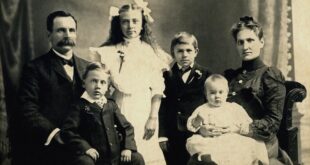
My mom, Angela Nieli, married my dad, Calogero Sammartino. Of course when we came To America. Mom became Angela Sammartino. My dad’s brother married an Angela Sabella but when they came to America she became Angela Sammartino. So, people would say Angela di Calo or Angele di Vincenzo to know who they were talking about. My mom’s brother was Vito, his wife was Vita, and daughter Vita, and granddaughter Vita. And my sister was also Vita.
I have lots of cousins named Giuseppe, Vito, Vita, Antonio and Salvatore.
I am proud to say I am the only Maria Antonia! LOL