 Fra Noi Embrace Your Inner Italian


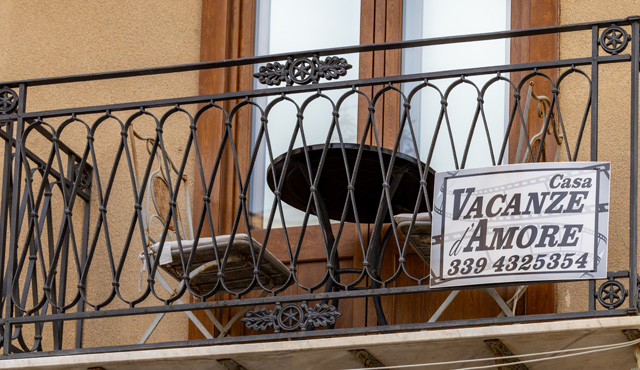
For many Italian Americans, owning a home in Italy has always carried a special emotional appeal. A small apartment in Florence, a pied-à-terre in Rome, a house in Naples, a retreat in Bologna or another historic city: the dream is often simple. Use the property for part of the year, rent it out when not in Italy, and allow the home to help cover its own costs.
Until recently, that model was relatively easy to understand. Not effortless, of course — nothing involving Italian bureaucracy is ever free hassle — but manageable. Today, however, short-term rentals in Italy have become one of the most politically sensitive areas of real estate law. The rules are changing quickly, and not only at national level. Cities are now stepping in with their own urban planning tools, restrictions, registration systems and policy choices.
The result is a fragmented and evolving landscape. For owners and buyers, the key message is clear: before assuming that a property can be freely used for tourist rentals, local rules must be checked very carefully.
At national level, Italy has introduced the CIN, the Codice Identificativo Nazionale, a national identification code for properties used for short-term or tourist rentals. The CIN must be obtained through the national database managed by the Ministry of Tourism and must be displayed in property listings and, where required, at the property itself. Online platforms and intermediaries are also expected to prevent the publication of listings without the required code.
This is part of a broader effort to bring transparency to a market that has grown very fast, especially in historic cities. It also gives public authorities more effective tools to identify unregistered properties and compare national, regional and local data. In practical terms, the days of informal short-term rentals are over. The system is becoming traceable, digital and increasingly enforceable.
The tax regime has also become more selective. In general, income from short-term rentals may still benefit from the cedolare secca, the Italian substitute tax regime, but the most favorable treatment is no longer something to take for granted in all cases. The 21% rate remains available for one property, while different treatment may apply to additional units. Owners managing multiple properties may also face the risk of being treated as carrying out a business activity, with broader tax, VAT, accounting and social security implications. This is particularly important for foreign owners who may think of short-term rentals as a passive investment. In Italy, the tax authorities may see it differently, especially when there are several properties, organized services or professional management.
But the real revolution is local.
Florence has become the leading example. The city has been at the center of the debate on overtourism for years, and the pressure on the residential housing market has become impossible to ignore. The municipality first introduced restrictions in the UNESCO historic center and has now extended the limits to additional areas around the center. The new rules block new authorizations for short-term tourist rentals in several zones, including areas such as Campo di Marte, San Jacopino, Gavinana, Statuto, Rifredi, Libertà, Oberdan, Savonarola and other surrounding neighborhoods.
The Florence approach is important because it treats short-term rentals not merely as a private contractual matter, but as an urban planning issue. In other words, the city is saying: this is not only about the relationship between owner and guest; it is also about the survival of residential neighborhoods, local services, long-term housing and the social identity of the city.
The Florence regulation also includes a municipal register, authorization rules, minimum size requirements and sanctions for non-compliance. Existing operators may benefit from transitional rules, but new openings are increasingly limited in the most sensitive areas. For anyone buying in Florence today, the question is no longer simply, “Can I rent it on Airbnb?” The better question is: “Is this specific unit, in this specific street, still eligible for tourist rental use under the current municipal rules?”
Naples is moving in a similar direction, though through a different legal path. The city has been studying a variant to its urban planning rules aimed at protecting residential use in the historic center. The proposed mechanism is based on a minimum threshold of residential use. In simplified terms, in the regulated area at least 70% of the relevant building surface should remain dedicated to ordinary residential use. The complementary space available for tourist or hospitality-related uses would therefore be limited.
This is a particularly interesting model because it looks not only at the individual apartment, but at the balance within the building or urban unit. The idea is to avoid entire buildings being gradually transformed into de facto hotels, with no real residential life left inside. From a policy perspective, Naples is trying to act before reaching the same level of pressure experienced by cities such as Florence and Venice.
For property owners, however, this also means uncertainty. Until the rules are finally approved and fully implemented, each case requires careful verification. A property in the historic center of Naples may appear perfect for short-term rentals on paper, but its actual future use may depend on the applicable zoning area, the number of existing tourist units in the same building, the required municipal procedure and the implementing measures still to be adopted.
Bologna offers another lesson: the legal path to regulation is not always smooth. The city had introduced urban planning restrictions on short-term rentals, including a specific category for tourist activities carried out in residential units and certain minimum surface requirements in the historic center. However, at the end of 2025, the Council of State found a procedural defect in the approval process and the municipality had to reopen the terms for observations within the urban planning procedure.
This does not mean that Bologna has abandoned the idea of regulating short-term rentals. Quite the opposite. The city has continued working on its planning instruments, and the regional framework in Emilia-Romagna has also moved toward giving municipalities more tools to regulate these uses.
Rome is, as often happens, a special case. The city has an enormous tourist market, a complex administrative structure and a huge variety of neighborhoods, from the historic center to residential districts with very different dynamics. A proposal to regulate residential properties used for tourist purposes has been under discussion, with reference to sensitive urban areas and the possibility of limiting changes of use toward tourist or hospitality functions.
As of now, Rome has not adopted a Florence-style blanket prohibition in the same way, but the direction is clear: the city is preparing to use urban planning and administrative tools to control the concentration of short-term rentals, particularly in areas where residential life is under pressure. For owners, this means that Rome should not be treated as a “free zone.” The compliance burden already exists, and more local restrictions may follow.
What does all this mean for Italian-Americans who own, or wish to buy, property in Italy?
First, short-term rental potential should never be assumed. It should be part of the legal due diligence before purchase. The notary will check title, cadastral issues and formal requirements for the deed, but the buyer should separately verify whether the intended use of the property is legally possible under national, regional and municipal rules.
Second, the analysis must be local. Italy does not have one single practical regime for short-term rentals. The national CIN is only one layer. Regional codes, municipal filings, zoning rules, tourist tax obligations, police guest reporting and condominium regulations may all apply.
Third, condominium rules matter. Even where public law allows short-term rentals, the building regulations may restrict or prohibit certain uses. This is often overlooked by foreign buyers, but it can become the most immediate problem after closing.
Fourth, tax planning is essential. A single family apartment occasionally rented to tourists is very different from several units operated in an organized way. The line between private rental income and business activity must be reviewed carefully.
Finally, buyers should be cautious with marketing language. Real estate listings often say that a property is “ideal for short-term rentals.” That may be commercially attractive, but it is not a legal opinion. Before relying on that statement, one should check the actual permits, local rules, building regulations and tax implications.
Italy is not banning short-term rentals altogether. The country still welcomes tourism, and many owners will continue to rent their homes legally and successfully. But the era of easy, unregulated tourist rentals is ending, especially in historic cities. The new question is no longer whether tourists want to come to Italy — they certainly do. The question is whether the specific property can lawfully be part of that market.
For foreign buyers, this is not a reason to give up on the dream. It is simply a reason to do what should always be done in Italy: check first, sign later.
Send your questions regarding Italian law to cbortolani@aliantlaw.com and I’ll be glad to answer them.
The content provided in this Q&A column is intended solely for general informational purposes and does not constitute legal advice. The information presented here is not tailored to any specific situation or transaction and should not be relied upon as a substitute for professional legal counsel. Legal issues can vary widely based on individual circumstances and jurisdictional nuances. Therefore, it is crucial to consult with a qualified legal professional regarding your specific case or concerns. Please be aware that no attorney-client relationship is established by accessing or interacting with the information provided in this column. The column’s author and publisher disclaim any liability for actions taken based on the information contained herein.