Kathryn Occhipinti
March 22, 2022
The Italian verb mettere and its reflexive counterpart mettersi are used in many colloquial expressions in Italy today. It is important to “put in” the time to learn how to use mettere, both literally and figuratively, if one wants to speak Italian like a native! The Italian verb mettere is most often translated into English as “to put” or “to place.” It can be used in a simple way, to describe moving an object from one place to another. Mettere is commonly used with the prepositions a, da, in and su in many Italian expressions that have the connotation of “putting” …
Read More »
C.J. Martello
March 22, 2022
Fifty is a nice round number and since I possess a 1972 Greater Roseland Area Directory and a 1972 Calumet Index Ninth Edition Greater Roseland Area Annual Yearbook, I thought it would be great if we could review what was happening 50 years ago. Roseland’s service organizations were the main topic of the Annual Yearbook. As we’re all aware, Roseland had many charitable service organizations that we or our parents belonged to. I know as a student at St. Willibrord’s High School, I was involved with the Lions Club through the Key Club Program, which got us out on the …
Read More »
Giuseppe Zerillo
March 22, 2022
Last year was one of the wildest rides in recent memory for the real estate industry. For realtors representing their buyers, 2021 was one long, mad scramble to help clients buy their home, with realtors representing sellers facing challenges of their own. The perseverance and patience of buyers’ agents was deeply tested throughout the year. With home inventory shortages stacking the odds in favor of the sellers, winning calls for highest and best offers could be quite discouraging. On the financing end of things, buyers were rushing to prequalify for letters of pre-approval so that they were able to take …
Read More »
Jeannine Guilyard
March 22, 2022
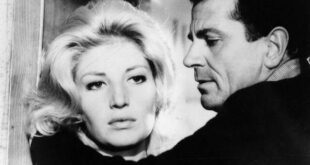
Italian cinema lost one of its most iconic stars on Feb. 2 with the passing of Monica Vitti at the age of 90. She suffered from dementia and hadn’t made a public appearance in nearly 20 years, but her acting prowess and simple-yet-stunning beauty will echo for generations to come. Born Maria Luisa Ceciarelli in Rome on Nov. 3, 1931, Vitti pursued acting as a teenager. She started in amateur theater before her formal training at Rome’s National Academy of Dramatic Arts. Shortly after graduating in 1953, she toured Germany with an Italian acting troupe and then returned to her …
Read More »
Kathryn Occhipinti
February 27, 2022
To speak fluently in another language, it is important to know how to introduce an object or to describe direction, location or time. We do this naturally in our own language with prepositions — short words like of, to, at/in/from, and by. All languages use prepositions but the choice of preposition in a given situation will differ from one language to another. This is the case for English and Italian; English and Italian often use prepositions in a different way. Also, in some situations Italian sentence structure may require a preposition where English does not! Let’s take a look at …
Read More »
C.J. Martello
February 22, 2022
Throughout the 13 years I’ve been writing this column I’ve heard many stories, and the fun part is I don’t have to seek them out! You readers are more than willing to talk about your Roseland days. At any of the many occasions that bring Roselandites together — whether it’s a gathering sponsored by St. Anthony’s, an event hosted by the Pullman National Monument or a chance encounter at a funeral — all anyone has to do is mention the old neighborhood and the stories begin to flow. Here are some of those stories that I can recall. Feel free …
Read More »
Jeannine Guilyard
February 22, 2022
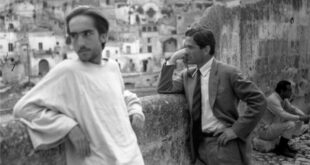
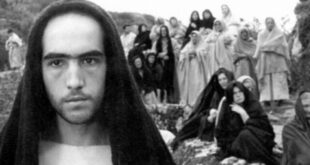
Pier Paolo Pasolini continues to be one of the most relevant filmmakers in world cinema. This month, he is being honored for his centennial year. Born on March 5, 1922, in Bologna, the renowned poet, filmmaker and intellectual would have turned 100 next month. We’ve discussed Pasolini’s 1964 film, “Il Vangelo Secondo Matteo” (The Gospel According to St. Matthew) many times in this blog and in the printed edition of the magazine. It’s become an annual tradition in my household to watch the film during the Lenten season. What continues to amaze me is how the film stays so relevant. …
Read More »
Fra Noi
February 22, 2022
Cinema Made in Italy is celebrating Italy’s official submission for the International Feature Film Award at the 94th Academy Awards in a variety of ways. Directed by Paolo Sorrentino, “The Hand of God” is a coming-of-age tale loosely based on Sorrentino’s life. To watch a video of Isabella Rosellini interviewing Paolo Sorrentino and the film’s star, Filippo Scotti, click here. To access an e-book that highlight the themes and imagery of the film, click here. To download “The Hand of God” Neapolitan recipe booklet by Daniela D’Antonio Sorrentino, click here.
Read More »
C.J. Martello
January 8, 2022
As anyone who grew up in Kensington, Roseland and Pullman knows, all you have to do is mention one of the many names we all loved, and the memories come flooding back. Let’s start with a walk down “The Ave” (Michigan Avenue) from 111th Street. A few of the meaningful names are Giovanni’s and Nino’s for pizza and Thom McAn’s, Bovenkirks, Malings and Robert Hall for clothing of varied sorts. For real variety, the name that reigns supreme is Gately’s. Gately’s was basically our Marshall Fields, where we could find everything for we need for our school and social lives, …
Read More »
Jeannine Guilyard
January 8, 2022
There have been countless cinematic interpretations of thebooks of the Bible, but few have stood the test of time. One that qualifies as a classic is Pier Paolo Pasolini’s 1964 “Il Vangolo Secondo Matteo” (The Gospel According to St. Matthew). Considered by the Vatican to be among the best film adaptations of one of the Gospels, Pasolini’s 1964 film was shot in the regions of Calabria, Puglia and Basilicata. In an interview with RAI television while on location in Matera, Pasolini talked about the reasons for shooting there. “I chose two or three places in Basilicata. One is Barile, a …
Read More »
 Fra Noi Embrace Your Inner Italian