 Fra Noi Embrace Your Inner Italian


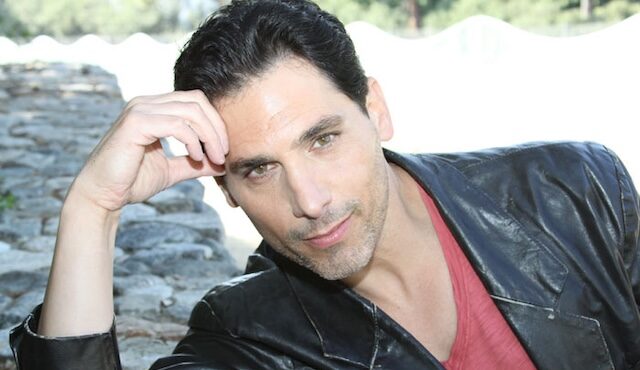 A stockbroker turned actor who was “discovered” on a train ride into work, Michael Cavalieri now focuses exclusively on Sicilian and Italian culture as a writer and director.
New York native Michael Cavalieri is an actor, writer and director who has made his desire to elevate storytelling about Sicilian-American culture the leitmotif of his work.
Cavalieri made his directorial debut with “Ritornato” (2021), a short film about a man who travels to Sicily to fulfill a promise to his dying mother and ends up discovering a life-changing family secret.
His award-winning documentary “La Porta Dell’Inferno” (2022) focuses on child laborers in the sulfur mines of Sicily. His latest work, the movie “Sulfur Road,” tackles the same topic, but through a different lens.
Cavalieri — whose website, neverforgetyourroots.com, tracks his cinematic journey —talks to Fra Noi about how he was “discovered” as an actor, what he learned in Hollywood and where his inspiration comes from.
ELENA FERRARIN: What sparked your interest in acting?
MICHAEL CAVALIERI: When I was young, I had an insatiable thirst for knowledge, and I read books and even the dictionary to try to be more educated. My grandparents didn’t speak any English, coming from Sicily with a third-grade education. My parents were not far behind with a minimal education. My only shot to get an education was to be great in sports and study hard. That way, I got into a prestigious prep school in Queens. At that time, watching films, especially neorealistic films and foreign films, really piqued my interest. I learned about many different cultures and, most importantly, my own Sicilian culture. It stirred my thirst for more knowledge about my culture and roots.
EF: How did you get into acting?
MC: I was “discovered” on a train going to work as a stockbroker on Wall Street. A man sitting next to me handed me his card and said, “You have a great look.” I thought he was a bit weird, but a few days later I called him. His name was Chip Lavely, and he was a theatrical agent. When I went to his office, he asked me to read something and said I could work in the business. Before you know it, we went to Los Angeles and he was my manager. I owe him a great deal. He believed in me when many others didn’t.
EF: You made your debut with a role in “The Next Karate Kid” (1994), starring Hilary Swank, and you’ve acted in other films alongside Hollywood A-listers such as Bruce Willis and Christopher Walken. What did you learn from them?
MC: I learned professionalism and being prepared. Especially from Christopher Walken. I admired his work, and he’s a great example of a prepared actor. When we were doing scenes together, he was always there for me.
EF: You have also guest starred on TV shows such as “The Sopranos,” “ER” and “NYPD Blue.” What is that like?
MC: It was a privilege. Watching many of these shows on TV and then actually being a guest star on them is a humbling experience. I am blessed.
EF: You made your directorial debut with “Ritornato,” in which you also star. What sparked your desire to embark on this project?
MC: After the loss of my parents and my sister, I was confused and lost. I needed to find myself. This journey and project were inspired by my mother, Mary, and my grandfather Agatino Alibrandi, who came from Limina, Sicily. I used to spend a lot of time with my grandfather, and I was inspired by the conversations we used to have — or tried to have, because he didn’t speak English, although emotionally, I understood everything he said. “Ritornato” was about finding myself and rediscovering my roots. In fact, my website is neverforgetyourroots.com.
EF: Why did you want to also direct the movie?
MC: Because I was in dire straits! The original director didn’t envision the script the way I wrote it, so people told me to do it myself. It was a bit intimidating at first. But I prepared relentlessly, and when it was time to shoot, I was confident and relaxed. I owe a lot to the film’s executive producer, Peter Schink, who is a great friend and mentor, and to my beautiful and talented wife, Maria, who produces all my films and acts in them as well. Without her, none of this would have happened. And now my other partner is my boy, Matteo! I really hit the jackpot with him.
EF: How difficult is it to direct a movie you also star in?
MC: It’s difficult, but the key is preparation and hiring a great crew with the right actors. I believe in lots of rehearsals and coming together as a family. It makes the job easier and much more enjoyable.
EF: Why did you follow your family-inspired short film with a documentary?
MC: I found out about the “carusi,” these young miners who worked in slave-like conditions in the sulfur mines in Sicily, and got really interested in the topic. I started researching and decided to write a screenplay about it. To inform the screenplay and my vision, I traveled to the area where there used to be many sulfur mines, and I was introduced to some of the remaining men that at ages 12 to 14 were carusi. Those meetings and conversations inspired my documentary.
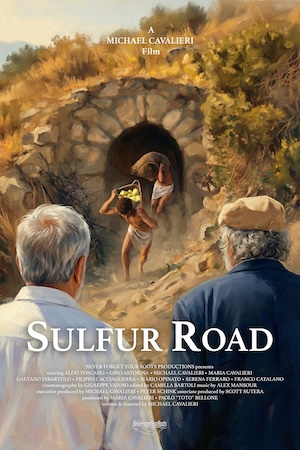 EF: Your latest work, “Sulfur Road,” is a movie that focuses on two carusi who reunite in their final years of life. Why did you want to continue with this topic?
MC: Because these men are superheroes to me. They silently suffered so their families could thrive and realize their true dreams. They moved me to the core. I felt like the world needed to know about this untold story. I wanted to give them a face and dignity and honor.
EF: Why have you chosen to focus so much on Italian, and particularly Sicilian, topics?
MC: Because people want to stereotype our culture. We are so much more than stereotypical mafia movies that diminish our culture. I want the world to know how great and grand and historic Sicilian/Italian culture is.
EF: What other plans do you have for the future?
MC: I have two projects ready to go: a documentary and another story based on true events in Sicily.
EF: Have you ever considered branching out and tackling other topics?
MC: No. I want to continue to tell stories about my culture. There are so many to tell the world. Real stories based in history about the people, the struggle and our ancestors. They gave up so much for us to have an opportunity to live a better life. Depicting them as stereotypes and goons in movies — instead of superheroes and fighters and hard workers — is our generation’s biggest mistake. We need to do better. We were denigrated and treated unfairly when our culture first came to this country. We must never forget this. I know I won’t.
For more, click here.
The above article appears in the June 2026 issue of the print version of Fra Noi. Our gorgeous, monthly magazine contains a veritable feast of news and views, profiles and features, entertainment and culture.
To view a sample copy, click here.
To subscribe, click here.