 Fra Noi Embrace Your Inner Italian


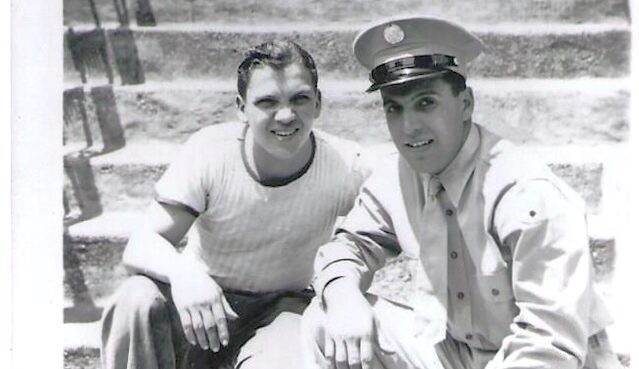
I first heard the above about seven decades ago. It gave me and my cousins the giggles to hear my Uncle Mil refer to one of my great-aunts that way. But let’s start the story with the man who brought so much lighthearted joy into our lives.
His name was Emilio Antonio Grippo. Born in 1920, he was the first son and fourth child of Antonio and Elena (Morrone) Grippo, who had emigrated from Laurino, Salerno, Campania, Italy around 1912. My grandparents lived on May Street just south of Taylor Street in Chicago’s legendary Little Italy. Finances, fate and the course of history would prevent them from ever returning to their ancestral home.
Emil, along with his three older sisters — Mary, Barbara and Angie — and later his two younger brothers — Frank and Louie — were first-generation Italian Americans.
Emilio’s name evolved as he became more Americanized, morphing into Emil and eventually Uncle Mil by the time I got to know him.
He honed his sense of humor growing up in his Italian-American family, and I believe he learned to get along so well with women because he had three older sisters. He found his future life’s partner, Marie, while still a teen.
This is where fate and the course of history came into play. World War II started. Emil was the first in the family to enter the service, in January 1942.
He did his basic training at Camp Robinson, Arkansas, where his girlfriend, Marie, and his sister Angie (my mom) paid him a visit.
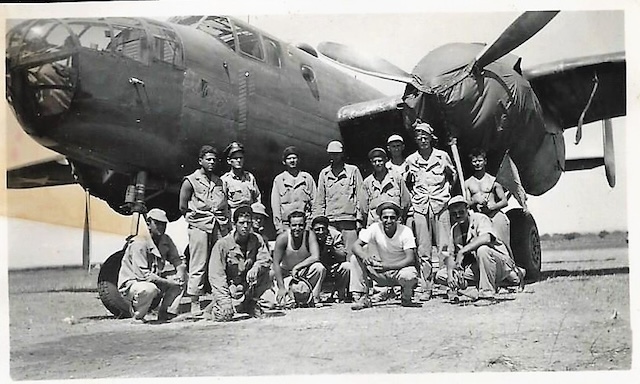
Finally, he became a member of the 12th Air Force of the U.S. Army Air Forces, joining a ground crew for B-25 bombers.
Guessing that he might make it to Italy because of the war, his mother gave him a quest. She had many relatives still in the village in Laurino, and she asked him to look up her side of the family, the Morrones, if he was able. A son will do anything for his mother, so of course Emil said yes.
It became a long and winding journey for Emil to fulfill that request: first England, then North Africa, then Sardinia and finally mainland Italy.
He had his individual adventures along the way. Because of his Italian blood, he boasted a classic Mediterranean complexion. In the sun of North Africa, he became VERY tan. He made a bet with his unit that he could walk through one of the Arab villages and no one would notice him. He won the bet.
The bomber crews that flew the planes had a set number of missions and then they were sent home or reassigned. The ground crews stayed for the entire war.
Emil became close with his ground-crew mates. In fact, one of them, Tony Dina, became the best man at his wedding and godfather to his first son.
Tony’s family came from Sicily and he was on the same quest as Emil. If he got the chance, he was to visit the relatives. After Sicily was secured, Tony got the chance. Since they had access to air transport, he and Emil flew to Sicily in a B-25 and visited Tony’s family.
Finally, mainland Italy was secured. The B-25s had a base in Italy to call their own. Emil was closer to fulfilling his mother’s quest.
The village was up in the mountains of Italy. He took a bus to the end of the line, later telling me that he only had to pull his gun once on the bus to stop some problems.
Now, how to get up the mountain to Laurino? His parents had come down the mountain by mule many years earlier. Because he was a first-generation Italian American, he did speak the language of his forebears. He talked to the people at the end of the bus route and told them his problem. They said they knew a guy who had a motorcycle with a sidecar. They would call him. He bartered with the guy, who agreed to take him up the mountain road to Laurino in exchange for a carton of cigarettes.
After a long day, he finally arrived in Laurino in the evening and he began to wonder how he was going to find the Morrones in the dark.
Suddenly, out of the dark walked an old man. Emil stopped and asked for his help in finding the Morrone family.
The old man looked at Emil suspiciously and asked, “Who are you?”
Emil told him of his mother, who was born in the village, and how she had sent him to find her family.
The old man smiled at hearing the story and said, “I’m a Morrone.”
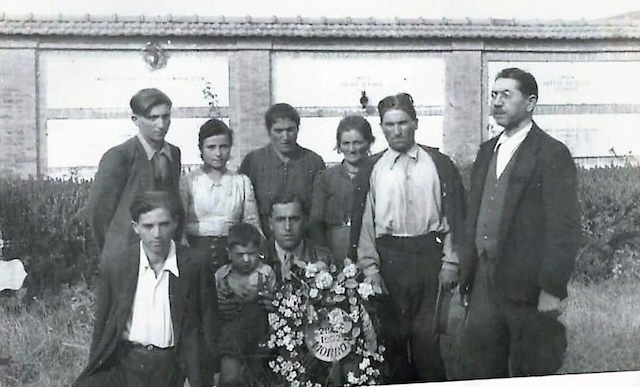
Emil was treated as a returning family member. He met many Morrones and other family members, and visited the graves of his mother’s parents. He had fulfilled his mother’s request.
Emil returned home and married the love of his life, with whom he spent more than half a century in wedded bliss.
His visit to Laurino was talked about for many years. Other members of family also got to go back several times.
Emil was supposed to return to the village after 50 years in 1994, but he was unable to go because of poor health. I was part of the group that went. It was a very moving experience for me and the other family members who made the trip.
But I suppose you want to know about “Cigarman.” Well, I found out the joke was on us.
I had mentioned that all those first-generation kids spoke Italian, but not the second generation. The older generations used to speak Italian when they didn’t want us to know what they were saying and that was the extent of our exposure.
In fact, I didn’t find out the real reason behind my great-aunt’s odd nickname until I was a young adult. That’s when I learned that “Aunt” and “Uncle” in Italian are “Zia” and “Zio,” respectively. And when you drop the last vowel, as the previous generation did, name and title merged, and so Zi’Angelo was married to Zi’Carmen and so on. The way my Uncle Mil slurred it, it became Cigarman to us young kids.
I don’t have any Cigarmen left in my family, but maybe some of you do. Now I have a quest for you. If you have a Zio Angelo or Zia Carmen in your family, tell them hello from me.
The above article appears in the June 2026 issue of the print version of Fra Noi. Our gorgeous, monthly magazine contains a veritable feast of news and views, profiles and features, entertainment and culture.
To view a sample copy, click here.
To subscribe, click here.



A beautiful article!! Brought tears to my eyes!! So much information!!
Marie and Emil had 4 kids. One of them was Philip Grippo. Philip married and had two boys, Philip Jr and Vincent Lawrence. Vincent has a girl, Kennedy. Philip married and we have a son, Jacob Grippo.
Jacob and Kailey hope to bring in more Grippos. They are taking a trip in October 2026. I hope he can run into family.