 Fra Noi Embrace Your Inner Italian


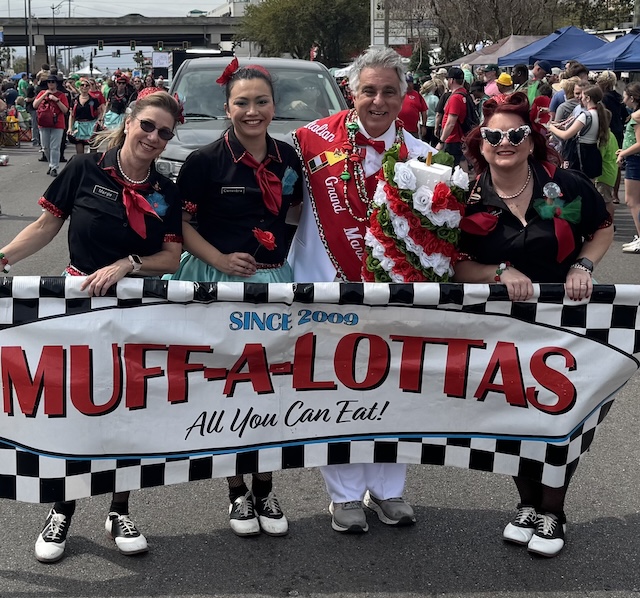
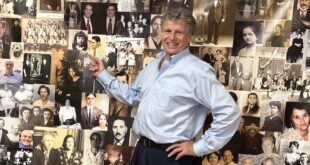
Born and raised in the Big Easy, Charles Marsala has helped transform the way the public views the city’s vibrant Sicilian past.
From the time he spearheaded the recognition of Italian History Week when he was high school student council president, Charles Marsala has been steadfastly devoted to honoring the contributions of Italian immigrants in his native New Orleans and across Louisiana.
Marsala has served as president of the American-Italian Federation for the Southeast since 2019, and established the Marsala Cultural Fund to support projects to memorialize local Italian American history in film, TV and historic markers.
A businessman and rental property owner who splits his time between California and Louisiana, Marsala talks to Fra Noi about some of the myriad initiatives he’s been involved in.
ELENA FERRARIN: Tell us about your roots.
CHARLES MARSALA: I was born in New Orleans but we went to Monroe (265 miles north) for all holidays, weddings and even Sunday bingo at the Italian club there. It is through the Sicilians in Monroe that my heritage became a large part of my activities. My grandfather was the leader of the Italian community in Monroe and the six Italian organizations across northeast Louisiana, which held an annual convention every Labor Day until the 1980s.
EF: Does anything set apart the history of Italian immigrants in Louisiana from other communities in the U.S.?
CM: Many are surprised to learn that there is any Sicilian/Italian heritage in Louisiana and the Southeast. New Orleans does not have a Little Italy, as many other cities do, but the lower French Quarter was once called Little Palermo because Sicilians came over to cut sugar cane, pick cotton and work the docks. Many here still identify as Sicilian. St. Joseph’s Day is our big day, and in the last few years, more and more Italians are coming in from around America to experience our celebrations.
EF: You have a show on YouTube that covers New Orleans’ Sicilian history from the 1800s to the present. What are some salient events?
CM: The theme is “Immigrants to Business Success to Leaders.” Main events are the 1891 massacre of Italians (when 11 Italians were lynched in New Orleans after the community was deemed responsible for the murder of Police Chief David Hennessy, despite trials resulting in acquittals and mistrials); the 1893 hurricane in Louisiana that killed 500 Italian fishermen; and 11 pasta factories opening in New Orleans after the Dingley Tariff Act imposed a 100% tariff on pasta in 1897. Two products we have today from that era are Progresso Soup and Luxury Pasta.
EF: You were part of a group that in 2019 convinced New Orleans Mayor LaToya Cantrell to apologize on behalf of the city for the 1891 massacre. What did it take to achieve this?
CM: In 2018, Michael Santo was the chair of the Sons of Italy Social Justice Committee, which took on this task shortly after Columbus Day. Michael called me in December 2018 and as fate had it, I and another person were on Mayor Cantrell’s calendar for a meeting in early 2019. I added the apology to the meeting agenda, and Mayor Cantrell agreed. During the ceremony, the mayor admitted that several people advised her not to attend the event. Michael was instrumental in getting her to attend and present.
EF: Tell us about your efforts to get the state of Louisiana’s approval for 14 historic markers about Italians.
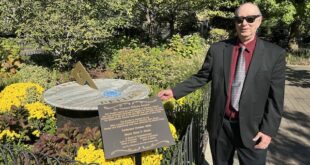
CM: They take a lot of work to research and validate. The state does this once a year, and I have been getting two to four markers approved per year. So far, the only ones erected are on state land in New Orleans, and a major goal is convincing the New Orleans City Council to allow the erection of 10 markers recognizing Sicilian and Italian contributions. One honors Col. Francesco de Pinedo, an aviator who in 1927 crossed the Atlantic from Italy to Africa to Brazil, then landed on the Mississippi River at Little Palermo. The plan is to build a Sicilian/Italian history trail starting in Little Palermo and going upriver to Donaldsonville, Monroe and Shreveport.
EF: You helped build a free smartphone app called “New Orleans Insider Tours.” What are some favorite destinations in Little Palermo?
CM: The Monument to the Immigrant located along the river, the Sicilians in Music marker at the Jazz Museum, Central Grocery, the BK House, St. Mary’s Italian Church and Irene’s restaurant.
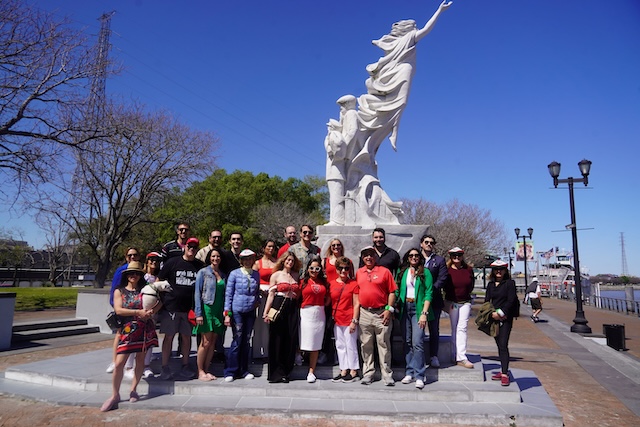
organized by Marsala
EF: What are some highlights of your Italian American initiatives?
CM: In 2000, I produced the film “Who Killa da Chief?” to show that several non-Italians had the motive and temperament to commit the murder of Police Chief Hennessy in 1890. The film was the runner-up in the NIAF/Russo Brothers film competition. Part two of that film was how the massacre led to expanded Columbus Day celebrations in 1892. In 2015, I had the idea to start a local TV show on endangered species whose scope has grown to include many issues, including Italian heritage. We have been nominated for three regional Suncoast Emmys. In 2017, I had the idea to erect Italian heritage markers in Little Palermo. In 2021, during the COVID-19 shutdown, Lena Prima asked me to co-host a local TV show called “Buona Sera Louisiana.” We did 17 episodes, many focusing on how Italians celebrate holidays and special days throughout the year.
EF: You have also made efforts to get the youth involved.
CM: After I became an area coordinator for the National Italian American Foundation, we opened chapters at Tulane University and Louisiana State University. We have sent eight college students to “Voyage of Discovery” trips to Italy, and a dozen young people to the annual Conference of Presidents of Major Italian American Organizations event for Italians ages 21 to 35 held in Florida.
EF: You served on the city council in Atherton, California from 2002 to 2010, including as mayor. Did you focus on anything related to Italian Americans?
CM: I hosted a summer party called “San Gennaro with a Mardi Gras Twist” with 500 people. We had bocce courts, Italian opera and “I Love the Italians” beads. Guests would bring Italian appetizers or desserts, and we provided the pasta.
EF: What can visitors find at the Italian Cultural Center & Innovation Hub that you recently launched in Menlo Park, California?
CM: The focus is Italian innovation and helping Italian companies enter the U.S. market. Current displays include “Columbia,” showcasing that this name — the feminine of Columbus — was given to U.S. exploration vessels since the time of George Washington, as well as to an airplane that crossed the Atlantic in 1927, the Apollo command and service module, and the Space Shuttle. Other displays are on the telephone, radio, Vespa and Ferrari. We will be adding Italian products soon.
EF: What are some of your future goals?
CM: Erecting a monument at Houmas House plantation to honor the Sicilians recruited to come to Louisiana to cut sugar cane. Also, getting Little Palermo on the National Register of Historic Places, and getting the state to add Italian history to its education curriculum.
The article above appears in the December 2025 issue of the print version of Fra Noi. Our gorgeous, monthly magazine contains a veritable feast of news and views, profiles and features, entertainment and culture.
To view a sample copy, click here.
To subscribe, click here.