 Fra Noi Embrace Your Inner Italian


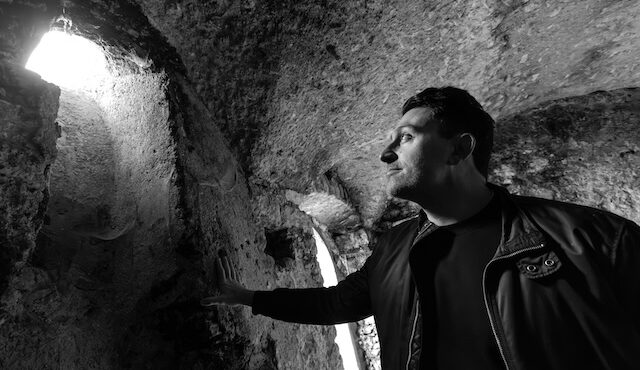
Photos by Rebecca Branconi
A century after his great-grandparents left a small Laziale town for America, Steve Decina has reversed the voyage, choosing to raise his children in the land of his forebears.
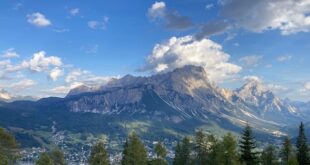
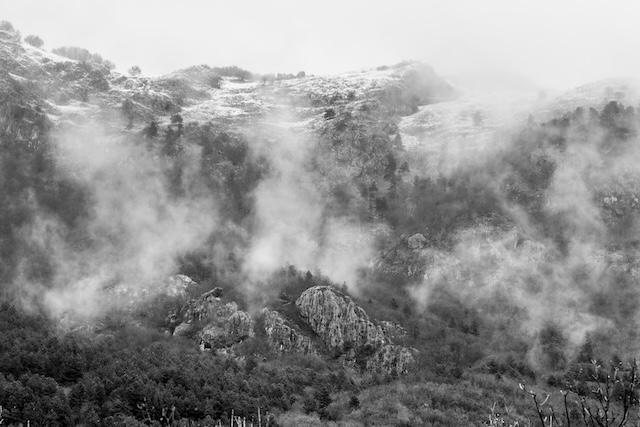
I will never forget the first time I saw San Donato. I had just crossed the Apennines from Pescara and descended into the Val di Comino. I drove, awestruck, into the gently lit village nestled into a notch between two snow-dusted mountains. It was incredibly beautiful — it reminded me of a presepe, the elaborate Italian Nativity scene that often sets the Holy Family among life in an idyllic little hamlet. I eased into the tiny piazza, not wanting to disturb what I immediately knew was sacred. I exited the car and walked up to a weathered monument honoring the village dead of World War I. Etched into the marble of the obelisk, I saw my last name, unique to this part of Lazio, and I was overcome with a desire to throw myself on the ground and kiss the stone.
As I stood in the village of my father’s ancestors, the question that had been sounding in my heart turned from a whisper to a roar: Could I make this move, could I trade prosperity for place?
Twelve months earlier, I was just a tourist on my first journey to Italy, traveling to Sicily to seek out my mother’s family. I flew into Catania, the plane skirting a growing cloud of ash from Mt. Etna. With only an address to a house that my aunt had visited during her honeymoon 50 years prior, I drove to the small town, found the home and knocked on the door.
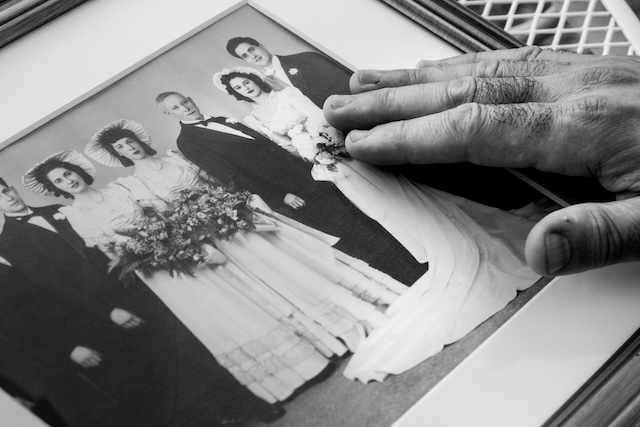
An older gentleman with curly black hair and kind eyes slowly emerged from the house. I handed him a photo of my grandmother on her wedding day, a beautiful 19-year-old Sicilian bride just one week before the attack on Pearl Harbor. He gave it a cursory look and glancing back at me, he stepped out into the sunlight.
Suddenly, his eyes widened. “Mia madre,” he whispered. “That’s my mother’s wedding dress. Your grandmother sent it to her from America.” The caution in my cousin’s eyes melted into tears. Within an hour, a procession of neighbors appeared. Elderly women, who were young brides themselves 50 years ago, had come to find out whether my aunt had kids and if her husband still made chickpeas the proper Sicilian way. I hadn’t felt this depth of community and connection since I was a boy, and it moved me deeply.
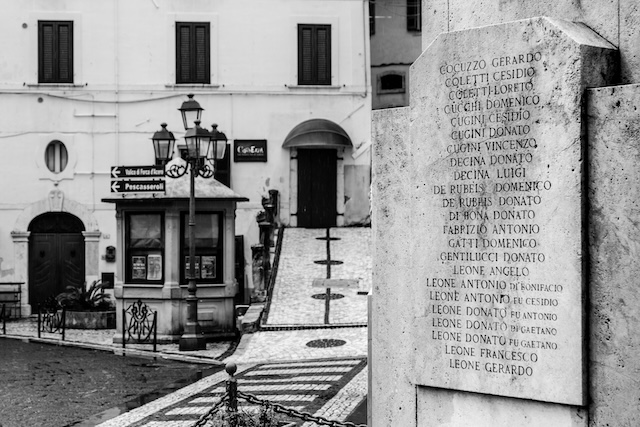
A year later, beneath that monument in San Donato, I was overcome with a feeling of place, of belonging. I thought, as I often do, about my ancestors. Did my dad’s grandfather stop as he left this village to gaze at the peaks one last time, trying to burn the horizon into his memory? What did my great-grandmother feel when she kissed her mother, knowing she would never see her again, these pine-scented winds enveloping their final embrace?
I couldn’t help myself. With tears in my eyes, I bent down and pressed my lips to the cold stone. After more than 100 years, our family had returned.
That night, I sat alone in a little osteria. Contemplative after a bottle of the local Maturano wine, I opened my journal and tried to capture what I was feeling. The pen hovered above the page for a minute, then two minutes, and I set it back down. I had no words to describe the tremendous emotion.
I thought about my ailing great-uncle back in Philadelphia, a spitting image of my long-deceased grandfather. I thought about my aging cousins in Sicily and the entire village that had remembered my aunt from one afternoon a lifetime ago. I thought about my dad and his father, neither of whom had ever made it to San Donato after my great-grandparents’ departure. I thought about the monument in the piazza, inscribed with the names of relatives that didn’t make it back home from the Battle of Isonzo. I picked up the pen and wrote one word — “home.”
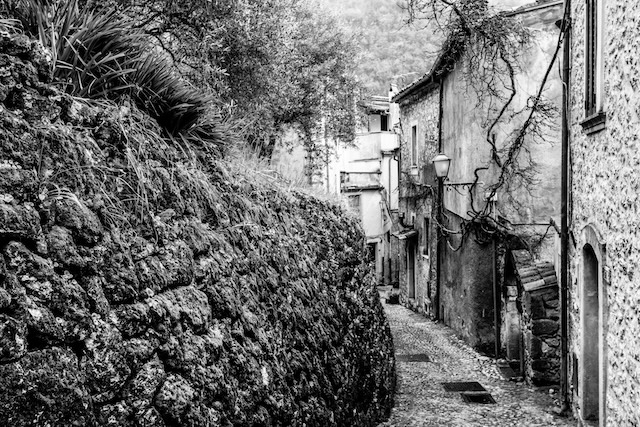
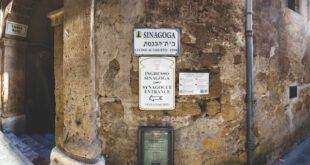
The next day, I was joined by Lucia, a woman with deep historical knowledge and a passionate love of the town. We walked in the winter sunshine through beautifully maintained stone alleyways. Lucia related stories to me of the role that the village had played during Nazi occupation, the villagers hiding Jewish children in the mountain forests, the women secreting them past SS guards in the enormous water jugs they traditionally carried on their heads. She took me past the address of the house where my great-grandfather was born.
I told Lucia, “My great-grandfather wanted to come back. He sent money here to buy this house, but he never returned.” She turned solemn: “So many of them wanted to return and never did. I am not sure who owns this house now, but I think some Dutch tourists may have bought it a few years ago.” My heart broke thinking about my great-grandfather and his dream — first difficult, then deferred and finally lost.
Later that evening, I joined some new friends in their home for dinner. Just like in Sicily, people started to come by — elderly women who knew my late cousin Silvana, distant relations who shared our peculiar last name, and neighbors with family in the large Sandonatese community in Massachusetts. That night, I opened my journal again and underlined the word I had written the night before — “home.”
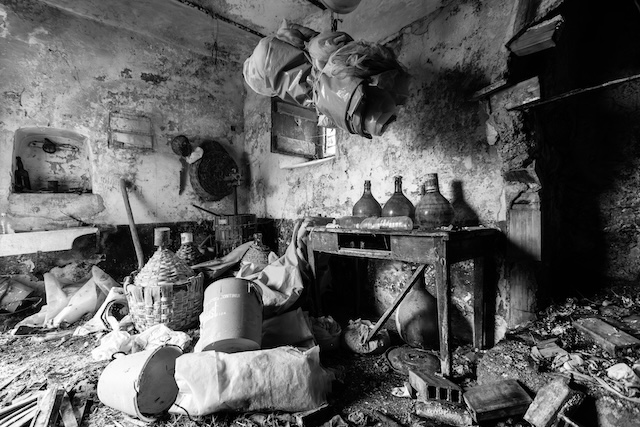
That was nearly a decade ago. As I write this, I am sitting in San Donato among the ruins of an ancient home that my wife and I bought last year. Built into a steep hillside terraced with olive trees, I first saw it four years ago peeking through a century of vines working to pull it back into the mountain. It has taken us that long to find all the documentation and to convince the family members — all 16 of them — that we are not just tourists, that we will be good stewards, and that our story belongs here. It will now take several more years and some serious fundraising to acquire and restore the entire hillside and make the home safe for our 2-year-old son and soon-to-be-born daughter. It is the project of a lifetime.
This is my family’s story, and while its next chapter — a return to our village — may differ from yours, its beginning undoubtedly does not. Our ancestors emigrated from Italy in poverty, making the crushing sacrifice to leave everything they knew, places that had nurtured us for millennia, to ensure a more secure future for their families. They came to America, traded place for prosperity, and they succeeded. And now we are left with the critical task, more difficult with each passing generation, to impart to our children the strong and beautiful culture that our ancestors brought from Italy.
For me, that means reversing my family’s migration and joining our fate again with that of our people. I dream of the day that I will hold my children’s tiny hands as we walk past that marble monument and into the building at the far end of San Donato for their first day of school. My children, the reason for all this effort, will grow up in a position that no one in my family has ever had — one of both true possibility and of true community, the product of two great sacrifices 100 years apart.
The one word that I wrote in my journal that first night in San Donato — “home” — is the same word that San Donato had written on my heart that very same night. And every time I arrive, and every time I leave, I lay on the ground, press the earth to my body and kiss the stone, praying that I will be able to return to Lazio again.
(Grazie mille to Tommaso Celli and Rebecca Branconi for their unending support; Geoff Cain for his invaluable feedback; and to my wife, Elena, without whom none of this would be possible.)
The article above appears in the October 2025 issue of the print version of Fra Noi. Our gorgeous, monthly magazine contains a veritable feast of news and views, profiles and features, entertainment and culture.
To view a sample copy, click here.
To subscribe, click here.