 Fra Noi Embrace Your Inner Italian

When I was a little kid in the Bronx, I naturally imbibed my notions of thrift from my parents and our Italian American milieu. An example occurs to me from the time I conceived a craving for Silly Putty.
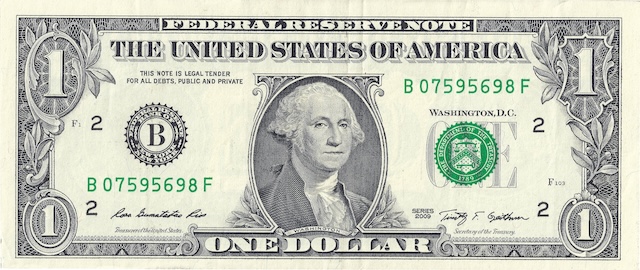
My mother and I were in the five-and-dime on Third Avenue when, right there on a toy shelf, I spotted a few dozen of the little plastic eggs that had become the latest childhood craze. But it occurred to me, what can you really do with Silly Putty, which was essentially a big wad of gum? Yes, it bounced and could be stretched out as far as your arms could reach. Big deal. What I wanted it for was its ability to pick up pictures from comic books or the funnies, which could then be stretched into funhouse-mirror-type images. Still, I reckoned Silly Putty was definitely not worth a dollar, which was a whole month’s tuition at my Catholic school.
“We can’t afford it, Ma,” I informed her, but she bought it for me anyway.
Then there was an ink bottle I carried to and from school in my pants pocket when we had to switch from pencils to fountain pens in the fourth grade. (Ballpoint pens were not allowed in our school because they were too modern and casual.) The twist lid on the bottle always managed to leak, so I had dark-blue thighs until my parents got me a schoolbag. But for a quarter, I could have sprung for an extra ink bottle that I could keep at home, but it never occurred to me. I obviously had assimilated the notion of, “Why spend money when you can avoid doing so, even at considerable inconvenience to yourself?”
Once I was playing basketball in the school auditorium (which doubled as a makeshift gym) with three other classmates. One of us, Stewart Headlam, a nerdy kid with a perpetually clogged nose, took a pathetic foul shot that landed far beneath the backboard, shattering a small window on a nearby wall. This was after school, when supervision was minimal, so we all ran out of there. The next morning, the principal, old Sr. Eugene, limped into our classroom and demanded to know who had been playing basketball in the gym the day before, when a window was broken. I stood up, as did two of the other boys—but not Headlam. Sr. Eugene then informed us that the window would cost $3 to replace, so we each had to come to school the next day with $1 to pay for it. At that, I did something unconscionable:
“Sister, Stewart Headlam was playing with us, too.”
Headlam stood up, blushing, and Sister said, “All right then, the four of you have to bring in 75 cents each tomorrow.”
My rationale was twofold: first, the guy who actually took that dismal shot should have fessed up, especially after he saw the rest of us get to our feet; and secondly, my parents would probably let me slide for 75 cents’ worth of damages but might get upset if the price tag of my playtime folly was an entire dollar.
And it wasn’t just a matter of covertly paying the dollar out of my allowance, because I didn’t get one. The notion that a parent owed any amount of money to a child on a regular basis was ludicrous in my father’s eyes, and I don’t believe any of my Italian friends got allowances either. An allowance, as concept, was something I first encountered on Leave It to Beaver. Still, Dad often asked me whether I had any money in my pocket, and if I said no, he gave me a quarter or two for incidental expenditures on soda or candy while I played outside. But knowing how tight money was, I never asked him for any and I sometimes did without.
Here’s another way I tried to live up to my parents’ code of frugality. Every year my school held a raffle for a big Thanksgiving turkey, and all students were required to sell at least one card with 10 chances on it, each costing a dime. The non-Italian fathers of some of my classmates took a bunch of cards to work and sold a few dozen of them, vying for a prize given to the kid who sold the most. Naturally, this was not the situation at our house, but one year I decided to save my parents the expense of having to buy all 10 chances themselves. After school I took my card and a pencil and walked a few blocks to the busy thoroughfare of Third Avenue (“The Hub of the Bronx”) and began hawking my chances at the passersby.
I realized a sales job was not in my future when I sold only three chances after standing there a few hours on a bleak November afternoon. My parents ended up buying the other 70 cents’ worth to make up my dollar quota.
For many years, whenever I thought about it, I remained puzzled that only three people bought a chance from me to win that turkey—whereas now I’m amazed that three people were wonderfully kind enough to interrupt their bustling journey for the sake of a little stranger on a cold autumn day.


Thank you, AGAIN, Peter for reminding me of our past as both of us grew up in Italian households in the Borough of “The Bronx”. Seems like eons ago, now, however via your writing(s) it all comes back from the snugly guarded recesses of my mind. Bitter sweet, to say the very least.
Thank you, Michael. Looking back can sometimes reopen old wounds, but the effort to understand our past is sometimes our only hope of healing. When it’s neither, we hope it’s at least . . . amusing.