 Fra Noi Embrace Your Inner Italian


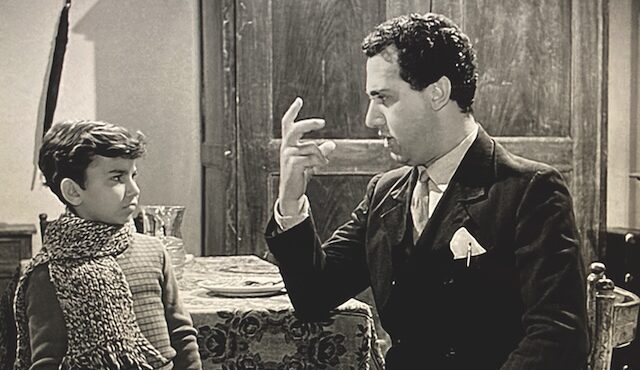
An early example of commedia all’italiana, “Bravissimo” is a true classic of the genre. Directed by Luigi Filippo D’Amico and starring Alberto Sordi, the 1955 film blends satire with heartfelt moments, offering a critique of the entertainment industry and the exploitation of child prodigies.
The story follows Ubaldo Impallato (Sordi), a substitute elementary-school teacher who supplements his income by running a tutoring program. Among the kids in his care is Gigetto, a 6-year-old with a rare musical talent. Ubaldo takes Gigetto under his wing, attempting to keep the boy safe from his greedy relatives while using him to chase his own dreams.

Set in a residential neighborhood on the outskirts of Rome, the film opens with Ubaldo pleading for a full-time job at the school where he is a substitute teacher. After hearing that one of the teachers is home with a temperature, he makes a bid to take over the class only to be interrupted by the teacher, who shows up saying that he has never missed a day of work.
Ubaldo returns home to find the children in his tutoring program waiting for him along with their parents. After the session is over and the parents have come to take their kids home, he notices that Gigetto has been left behind. Shortly thereafter, a police officer shows up, informing Ubaldo that the boy’s father has been incarcerated. When Ubaldo tries to hand over Gigetto, the officer refuses to take him.
Left to care for Gigetto, Ubaldo wants no part of this huge responsibility, so he searches tirelessly for the boy’s family members, who want nothing to do with him, either. That evening, he witnesses the boy singing opera in an extraordinary baritone voice. Ubaldo’s attitude changes instantly as he realizes that he can make money as Gigetto’s coach and agent. “Call me Uncle Ubaldo. Are you fond of me? I love you so much!” And so it begins. Ubaldo embraces his new role in the child’s life, along with the chance to make something of his own life.
Sordi was 35 years old when he made the film and he was well on his way to perfecting his trademark persona: an over-the-top, chameleonic character who borders on a sleazy con artist. As much as you want to despise them, Sordi gives these characters an empathetic quality that makes it difficult to root against them.
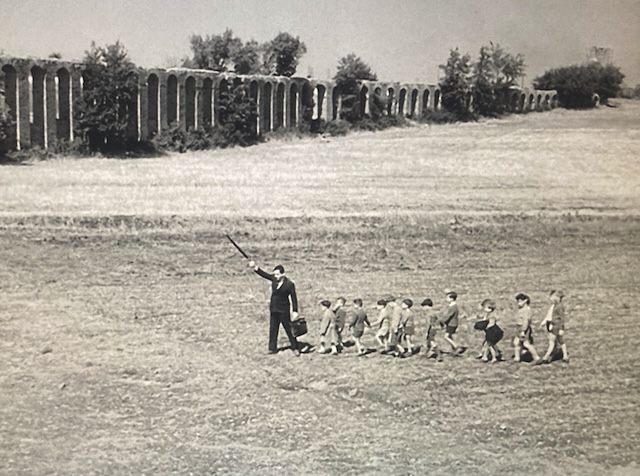
Most of the film was shot at Cinecittà Studios in Rome, including the scenes in the school where Ubaldo teaches. At one point, though, he and the kids in his tutoring program venture out into the real world, taking a charming excursion during which they follow him like ducklings to Parco Archeologico dell’Appia Antica, located not far from the studio. “Kids, right here where the sun magnificently sets, we can see the ruins of Claudius’ aqueduct,” Ubaldo expounds. A minute later, he’s having the kids dig up dandelion greens for his personal consumption that evening. “See this tiny plant?” he asks the children. “It’s cicoria. It’s edible.”
Ubaldo enjoys some short-lived success, basking in the envy of all those in the community who formerly shunned him, while growing fond of the child, who he once saw mostly as a meal ticket. But Gigetto grows tired of the grind, runs away and catches pneumonia, sending the film spinning off in a completely unexpected direction. Ubaldo’s dreams of becoming an impresario evaporate but his efforts aren’t completely in vain.
As entertaining as the film is, it has serious undertones and remains relevant some 70 years later, delving as it does into the world of child performers and the adults who are responsible for overseeing their careers. “Bravissimo” offers insight into the motivation of the adults and the toll it can take on the children.
“Bravissimo” is available to stream on Amazon Prime Video.
The article above appears in the July 2025 issue of the print version of Fra Noi. Our gorgeous, monthly magazine contains a veritable feast of news and views, profiles and features, entertainment and culture.
To view a sample copy, click here.
To subscribe, click here.