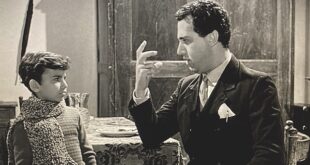
 Fra Noi Embrace Your Inner Italian


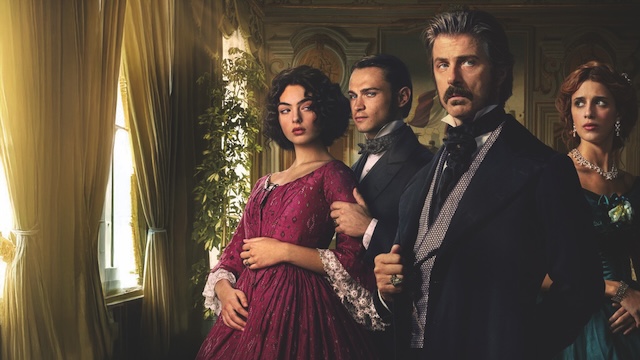
A new Netflix series adaptation of “The Leopard,” based on Giuseppe Tomasi di Lampedusa’s seminal novel, is captivating audiences worldwide. Directed by British filmmaker Tom Shankland, the series revisits the iconic tale first brought to the screen by Luchino Visconti in 1963.
Set against the backdrop of 1860s Sicily during the Risorgimento, the film follows Prince Fabrizio Salina (Kim Rossi Stuart), an aging aristocrat witnessing the decline of the Sicilian nobility and the rise of a new social order. As Garibaldi’s forces land in Sicily, the prince reflects on the now-fleeting aristocratic way of life. His nephew Tancredi (Saul Nanni) embraces the changes and aligns himself with the new order, famously stating, “If we want things to stay as they are, things will have to change.”

Prince Fabrizio, once the epitome of male, moneyed privilege, finds himself grappling with a changing world where his way of life is becoming obsolete. He comes to realize that the aristocracy must learn to coexist with the new leaders and the rising middle class. In doing this, however, he knows that his daughter Concetta (Benedetta Porcaroli) will experience profound heartache.
Rossi Stuart, a veteran Italian actor and director, portrays Fabrizio’s sense of privilege with a hint of comedic flair, which is especially apparent when he brings his priest along on visits to his mistress, justifying his infidelity by claiming he has “never seen his pious wife’s navel.” Meanwhile, Tancredi, who has been courting Fabrizio’s daughter, finds himself drawn to a new rival for his affections. Angelica (Deva Cassel), the daughter of the newly wealthy mayor, Don Calogero (Francesco Colella), appears to be a perfect contender in this romantic competition.
Tancredi’s eventual engagement to Angelica is an example of things to come as old nobility merges with new wealth. Meanwhile, the prince grapples with personal and political change, as well as existential questions about mortality and his own legacy.
It’s difficult not to compare Visconti’s 1963 adaptation with Netflix’s 2025 interpretation. One striking point of continuity and change is the cinematography. Giuseppe Rotunno, who worked often with both Visconti and Federico Fellini, was instrumental in turning the original film into an enduring classic, with every shot of the beautiful characters and sumptuous setting reflecting the decadence of the milieu. Cinematographer Nicolaj Bruel carries the torch for the Netflix series, melding a modern take on the human drama with sweeping shots of the Sicilian countryside.
While Visconti’s main cast members were American, French and Italian, all speaking their native tongue while shooting, only later to be dubbed, Shankland’s main cast members are A-list Italian actors who are well-known and very popular in Italy. Cassel, who plays Angelica, is the daughter of Monica Bellucci and Vincent Cassel and an up-and-coming model and social media influencer.
Traditionalists may criticize the remake of a film as esteemed as Visconti’s “Il gattopardo,” but one can view this fresh take as breathing new life into classic characters and plotlines. The challenges that many of the characters face reflect issues that resonate with contemporary society, such as identity, relationships and aging.
As one would expect with a Netflix budget, the production quality of the series is truly exceptional. There is a combination of respect for the source material and innovative storytelling that not only brings a fresh perspective but also invites new generations to explore the original story. Young film critics, YouTubers and bloggers who never heard of Visconti’s 1963 film are so enthralled by the Netflix series, they are taking an interest in it, researching it and streaming it.
The choice to air the story out into six hour-long episodes rather than packing it all into a three-hour-long film like Visconti’s makes the pacing more relaxeed. Every new episode builds upon the last, with viewers becoming more connected to the plight of the characters. Ultimately, the Netflix series can serve as a bridge between the past and the present, showcasing how timeless tales can evolve yet remain impactful across the generations.
The article above appears in the June 2025 issue of the print version of Fra Noi. Our gorgeous, monthly magazine contains a veritable feast of news and views, profiles and features, entertainment and culture.
To view a sample copy, click here.
To subscribe, click here.