 Fra Noi Embrace Your Inner Italian


They say still waters run deep, and that’s certainly been the case lately with Fra Noi. We may appear to be moving at our usual pace, but since we announced plans last year to dramatically up our game, we’ve been toiling tirelessly behind the scenes to make that happen.
By early next year, Fra Noi will boast a new look, new features and a wide-ranging digital campaign aimed at sharing our publication with the world. As we head into the home stretch of that transformation, the time is ripe to look back at how it all began.
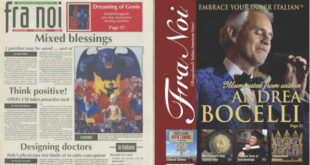
Fra Noi came into being a remarkable 66 years ago thanks to the vision and drive of one man: a Scalabrinian priest named Armando Pierini.
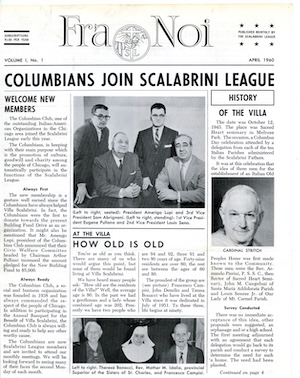
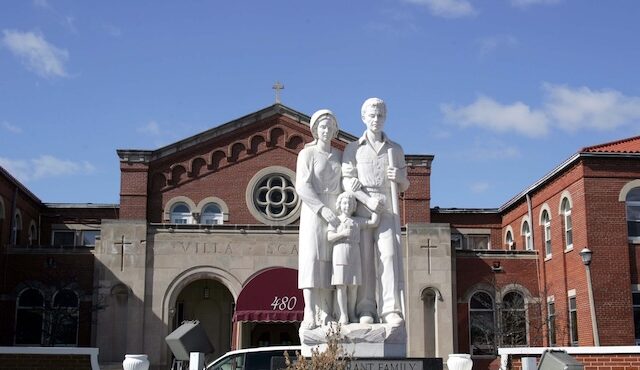
Small in stature but with outsized dreams and boundless energy, Fr. Pierini spearheaded countless fundraising carnivals, concerts and dinner dances on the way to launching Sacred Heart Seminary in Stone Park in 1936 and Villa Scalabrini Home for the Aged in Northlake in 1951.
In 1941, he began hosting the radio program L’Ora Cattolica to rally the community around the creation of the Villa, and in 1960, he expanded his media reach with the release of Fra Noi.
The editorial policy back then was simple: If you gave a lot of money to Villa Scalabrini, you got a lot of coverage in Fra Noi; if you gave a little money, you got a little coverage; and if you gave nothing, it’s as though you didn’t exist.
When Fr. Pierini went forth to gather donations, Fra Noi photographer Sam Bruno was always in tow. Each month, the pages of the publication brimmed with articles about Villa supporters and images of venerable organizations like the Columbian Club, Justinians and Arcolians giving generously to the cause.
Morphing quickly from an 8.5 x 11 newsletter into a tabloid newspaper, Fra Noi attained a circulation of 20,000 at its peak. Subscriptions were $5 a year, and if you stopped paying for it, you continued to receive it anyway. It was a money-losing proposition, to be sure, but those losses were looked upon as a crucial cost of doing business.
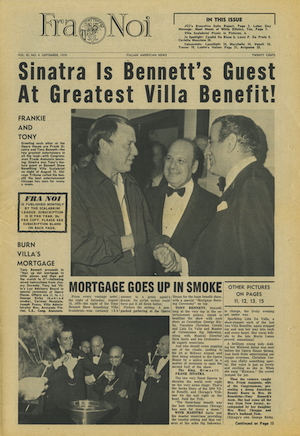
In those halcyon decades, the Villa, the Scalabrinians and the community were one, and Fra Noi was the glue that held it all together, but that dynamic changed dramatically in the 1980s. By then, the Villa had blossomed into one of the finest nursing homes in the state and the torch had been passed from Fr. Pierini to a fellow Scalabrinian, the Rev. Lawrence Cozzi.
Wanting an edifice of his own, Fr. Cozzi built Casa San Carlo next door to the Villa, but lacking Fr. Pierini’s gift for fundraising, he ladened his religious order with a debt it couldn’t possibly repay. Meanwhile, the Scalabrinians were heading in a different direction, relinquishing control of iconic properties like the parishes of Our Lady of Pompeii and St. Callistus while focusing their ministry on more recent immigrant groups.
When Catholic Charities assumed control of the Villa and Casa in the mid-80s, they viewed Fra Noi as a liability rather than an asset, cutting off delinquent subscribers by the thousands to stem the tide of red ink at least a little. And with the Scalabrinians no longer at the helm, the community was far less inclined to sign up for a publication they increasingly viewed as someone else’s newsletter.
By 1990, Fra Noi was losing money and readers hand over fist. That’s when I was brought in to right the sinking ship … But that’s a story for the next issue.
The above article appears in the August 2026 issue of the print version of Fra Noi. Our gorgeous, monthly magazine contains a veritable feast of news and views, profiles and features, entertainment and culture.
To view a sample copy, click here.
To subscribe, click here.



What a story! Good to hear the history and what effort was made to save it all. I enjoy Fra Noi, reading it cover to cover. Articles continuing on the next page are a pleasure rather than being sent off to later pages! Continued success.