 Fra Noi Embrace Your Inner Italian


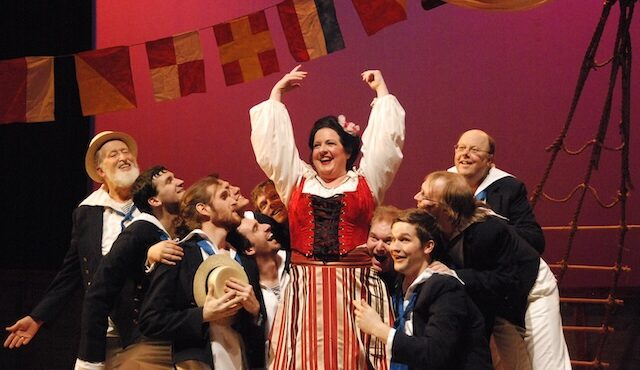
When asked where her passion for singing opera comes from, Rose Guccione answers with one word: grief.
She is referring to the untimely death of her father when she was 24, a tragedy that prompted her to question what she wanted to do with her life, she explains.
“The answer was an immediate question,” Guccione recalls. “Could I make a living from music? I made a pact with myself to work hard on developing my voice in order to audition for Chicago’s classical music venues for the six years that followed. I lived as a musical monk. I would practice in a church basement for two hours a night after work unless I was at a voice lesson.”
That process — being alone in a quiet space, exploring her voice and digging deep into the stories of each opera — helped her process her grief, which in turn helped her connect to the pain of the characters she studied, she recounts.
Five years from the very date of her father’s death, Guccione attended her first rehearsal as a full-time member of the Lyric Opera of Chicago Chorus.
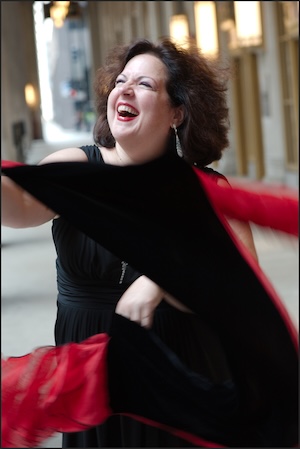
Guccione has since amassed a 14-page resume of varied musical experience, including as a chorus member and soloist with the Lyric Opera of Chicago for 20 years, from 1993 to 2013.
Most notably, she performed the title role in Verdi’s “Aïda” with Da Corneto Opera and sang the aria “O patria mia” from “Aïda” at the Grand Théâtre de Bordeaux, France.
She has also performed the role of Elisabetta in “Don Carlo,” Leonora in “La forza del destino” and Leonora in “Il trovatore” (all Verdi’s operas), as well as the roles of Musetta in Puccini’s “La bohème,” Micaëla in Bizet’s “Carmen,” Madame de la Haltière in Massanet’s “Cendrillon” and Elvira in Rossini’s “L’italiana in Algeri,” among many.
A resident of River Forest, Guccione holds bachelor’s and master’s degrees in music, both from Northeastern Illinois University in Chicago.
She grew up in Chicago’s La Villita neighborhood and began to sing classical music with adult choirs at age 8. Her high school chorus teacher took her under his wing, meeting with her after school so she could learn arias and duets and listen to recordings of opera divas. He also took her and other students to classical and operatic events in the city.
The founder of the operatic singing telegram company OperaGram.com, Guccione also works as a stage actor and comedian. Her resume including working as an actor for the law firm Kirkland & Ellis’ Kirkland Institute for Trial Advocacy for nearly a decade. The role requires assimilation of depositions and other case file materials, witness preparation and witness examination for mock trials.
She has also worked as an adjunct instructor for Dominican University’s department of theatre arts and music since 2010 and is director of vocal music at Fair Oaks Presbyterian Church in Oak Park.
Before joining the Dominican faculty, Rose taught with the Lyric OperaKids program for Lyric Opera of Chicago, and taught voice lessons at Columbia College’s Sherwood Conservatory, where she also served as interim department head and was on faculty at the Merit School of Music.
An opera singer should have a beautiful voice, a solid vocal technique, the ability to learn music well, a strong facility with languages and the skills of an actor, Guccione says. Most of all, “they should absolutely love the art form, because the path of the opera singer is full of challenges.”
Guccione especially loves to perform Verdi’s “Aïda.”
“Soaring over the opening chorus “Su! del Nilo al sacro lido” is great fun. The arias “Ritorna vincitor!” and “O patria mia” are emotionally intense. The final duet with Radames in the tomb is transcendent.
Her favorite opera singer is the late Italian soprano Renata Tebaldi, whom she described as singing “with her very soul.” “(Her) voice was not only powerful and beautiful; her connection to the text was intimate.”
As for an opera she’s always wanted to sing, she pointed to Puccini’s “Turandot.”
Opera companies nowadays have to work harder than in generations past to fill the seats, Guccione acknowledges.
“They are casting their nets more broadly as evidenced in the providing of education, the outreach to young professionals, the creation of new operas, the leveraging of social media, the broadcasting of opera online and in movie theaters, and the price structure of tickets.”
Guccione suggested that those who would like to experience and find out more about opera should, after first reading synopses online, attend a live production of the following operas: Puccini’s “La Bohème,” “Gianni Schicchi,” “Madama Butterfly” and “Tosca”; Verdi’s “Aida,” “Falstaff,” “Macbeth,” “Otello” and “La traviata”; and Mozart’s “Le nozze di Figaro,” “Così fan tutte,” “Don Giovanni” and “Die Zauberflöte.”
“I do believe once an audience member experiences opera for the first time,” Guccione says, “it is something they will want to return to time and again.”

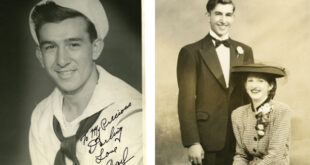
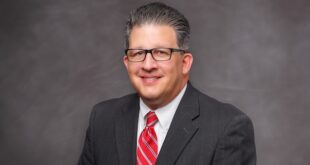
ROSE Is a very talented singer and actress. She is also a wonderful, thoughtful member of our family. We are so proud of her!