 Fra Noi Embrace Your Inner Italian



All across Italy, private homes have been converted into public museums that spotlight aspects of the nation’s history while celebrating the individuals who helped shaped them.
After you’ve marveled at the grandeur of the Colosseum, wandered along the endless halls and galleries of the Uffizi, and glided on the canals of Venice, Italy’s hidden gems — its house museums — are ready and waiting to immerse you in intimate histories, personal collections and unique glimpses into the lives of some of the country’s most fascinating figures. Far beyond the tourist trail, you’ll discover rich and engaging stories within the walls of these enchanting establishments.
A house museum in Italy is usually a historic residence that has been preserved and transformed into a museum to showcase the life, works or historical significance of its former inhabitants. These museums offer visitors a chance to step back in time and explore the living spaces, personal belongings and sometimes even the original furnishings of notable individuals in an intimate way. Within, you’ll find a range of artifacts, such as paintings and sculptures, manuscripts, personal correspondence, furniture, household items, and memorabilia associated with the museum’s subject. Some house museums also feature exhibitions, interactive displays, guided tours and educational programs to enhance the visitor experience and provide context for the exhibits.
Honoring famous artists, writers, composers, politicians or historical figures, Italian house museums shed light on the personal lives, achievements and contributions to Italian culture and history. Overall, they offer a unique opportunity to connect with the past, gain a deeper understanding of Italian heritage and appreciate the legacies of the individuals who once called these historic residences home.

Casa Manzoni, Milan
Located in the heart of Milan, Casa Manzoni is a cultural landmark dedicated to the life and works of the renowned Italian writer Alessandro Manzoni (1785-1873). The museum is housed in the very building in which Manzoni lived and wrote his most famous novel, “The Betrothed” (“I promessi sposi”), considered one of the greatest works of Italian literature.
The museum preserves the atmosphere of the early 19th century, re-creating the living spaces and ambience of Manzoni’s time. Visitors can explore various rooms, including the writer’s study, bedroom and dining room, which contain period furnishings, personal belongings and memorabilia associated with Manzoni and his family.
In addition to showcasing Manzoni’s personal effects, Casa Manzoni features exhibits on his literary works, including original manuscripts, early editions of his novels and documents related to his writing process. Through them, visitors can gain insight into Manzoni’s creative process and the historical events that inspired his literary masterpiece, “The Betrothed.”
Villa San Michele, Anacapri
“My house must be open to the sun, to the wind, and the voice of the sea, just like a Greek temple, and light, light, light everywhere!” — Axel Munthe
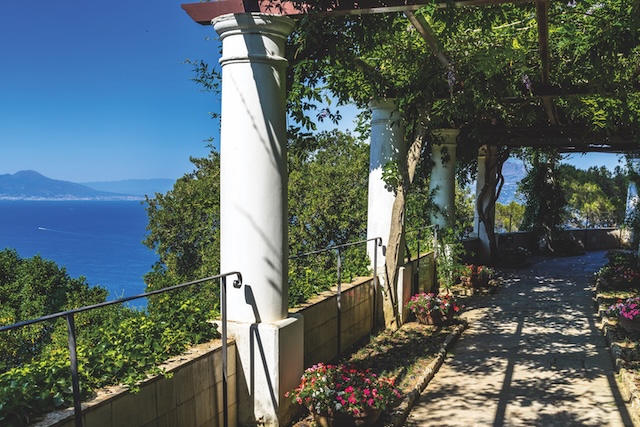
The dream home of Swedish doctor Axel Munthe (1857-1949), Villa San Michele was built at the end of the 19th century on the ruins of an ancient chapel dedicated to San Michele. His goal was to create a sanctuary of beauty and tranquility. This stunning villa is located on the island of Capri, perched high atop a cliff in the charming town of Anacapri.
One of the highlights of the villa is its magnificent garden, a lush oasis filled with exotic plants, fragrant flowers, Egyptian relics and hidden pathways that wind their way through terraces and pergolas. From every angle, visitors are treated to panoramic views of the sparkling blue waters of the Tyrrhenian Sea, the rugged coastline of Capri and the distant peaks of Mount Vesuvius on the mainland.
Throughout the villa, visitors can take in Munthe’s eclectic collection of art and antiquities, including Roman sarcophagi, Etruscan pottery and Renaissance paintings. The interior is adorned with intricate tilework, colorful frescoes and ornate furnishings that reflect Munthe’s diverse tastes and cosmopolitan lifestyle.
The walk from Piazza Vittoria to Villa San Michele is approximately half a mile and takes 10-15 minutes at a leisurely pace. It’s a lovely journey that offers a breathtaking view of Capri, leading you to an equally lovely place to spend a morning or afternoon while on the island.

Villa Farnesina, Rome
No matter where you are in Rome, you’ll find a house museum around practically every corner, if not right in front of you. The popes weren’t alone in thinking that the rooms, hallways and loggias of their stately residences ought to be over-scaled and highly decorated, with frescoed ceilings, gilt-framed paintings and gleaming marble Greek gods and goddesses. Popes had relations who also used their digs for personal art collections. So did several centuries worth of cardinals, nobles, queens in exile, art-loving French imperialists and Romantic-leaning English poets, as well as painters, sculptors and other artists from around the globe. Collectively, they left behind a wealth of treasure palaces and curious cubbyholes displaying something for every taste.
Villa Farnesina is one such property, even though it didn’t belong to a pope. A beautiful Renaissance villa along the banks of the Tiber, it was built in the 1500s by Agostino Chigi, a wealthy Sienese banker. He was known to have very extravagant parties, which included the tossing of silver and gold serving dishes into the Tiber. (Servants had previously placed nets there so they could be fished out when the party was over.) The villa makes a great stop because it’s neither huge nor exhausting. There are lovely frescoes by Raphael (a good friend of Chigi), Sebastiano del Piombo and Il Sodoma, and perspective puzzles (a Renaissance fascination) by Baldassare Peruzzi, who also was the architect.

Keats-Shelley House, Rome
Located at the foot of the Spanish Steps, the Keats-Shelley House is a museum dedicated to the English Romantic poets John Keats and Percy Bysshe Shelley. It is a significant literary landmark and a popular destination for fans of the Romantic genre. Keats lived in the house during the final months of his life. He moved to Rome in November 1820, hoping that the warmer climate would improve his health, but sadly succumbed to tuberculosis on Feb. 23, 1821, at the age of 25. The small room where Keats spent his final days has been carefully restored. It contains memorabilia and artifacts related to his life and work, including his bed, a lock of his hair and his death mask.
Although Shelley never lived in this elegant house, his life and works are closely associated with the Romantic literary movement and with Keats himself. Shelley died in a boating accident off the coast of Italy in 1822. The museum features extensive collections related to him and Lord Byron, another prominent Romantic poet who spent considerable time in Italy. Items on display include manuscripts, letters, portraits and first editions of the works by writers who were inspired by Keats, Shelley and Byron, including Elizabeth Barrett Browning, Walt Whitman, Oscar Wilde and Jorge Luis Borges.

Giorgio de Chirico House Museum, Rome
Nearby, at Piazza di Spagna 31, on the top floor of the 17th-century Palazzetto dei Borgognoni, artist and writer Giorgio de Chirico lived with his second wife, Isabella Pakzswer Far, from 1948 until he died in 1978. De Chirico described his house as being located “in the center of the center of the world.”
One of the highlights of the museum is de Chirico’s studio, which has been preserved almost exactly as he left it. Visitors can see his easels, paints, brushes and unfinished works, which provide a direct connection to his creative process. The museum includes a valuable library and several rooms in de Chirico’s private residence that are filled with his personal belongings, furniture and decorative objects that reflect his tastes and lifestyle.
The museum also houses a significant collection of de Chirico’s paintings, drawings and sculptures. These works span his entire career, offering a comprehensive overview of his artistic development and the evolution of his Metaphysical style.

Casa di Dante, Florence
Born in Florence in 1265, Dante Alighieri is considered one of the most important poets of all time. His “Divine Comedy” is a cornerstone of Italian literature and has profoundly influenced the Italian language and Western letters in general. Casa di Dante is located in the medieval quarter of Florence, near the site where Dante’s family house once stood. While the original house no longer exists, the museum is situated in a reconstructed medieval building designed to evoke the atmosphere of Dante’s time.
Exhibits are arranged over three floors and cover various aspects of Dante’s life, including his childhood, education and political career in Florence. Artifacts, documents and reproductions help paint a picture of his early years. A significant portion of the museum is dedicated to his masterwork, and contains illustrations, manuscripts and early printed editions of the work. Interactive displays help visitors understand the poem’s structure, themes and impact.

Palazzo Davanzati, Florence
Palazzo Davanzati provides a unique glimpse into the life and culture of a wealthy Florentine family during the medieval and Renaissance periods. The palazzo is a fine example of a medieval tower house and is noted for its well-preserved interiors and original furnishings. The palazzo was built in the mid-14th century by the Davizzi family, a prominent merchant family in Florence. In 1578, it was purchased by the Davanzati family, who gave the building its current name. The building’s architecture bridges the transition from the defensive structures of the medieval period to the more open and elegant designs of the Renaissance.
The palazzo is furnished with original and period-appropriate furniture, including chests, tables, chairs and beds. These pieces offer a comprehensive view of domestic interiors during the medieval and Renaissance periods. The walls of the palazzo are adorned with frescoes and tapestries that depict a variety of themes, from daily life to mythological and biblical scenes, adding to the rich historical atmosphere of the building. A variety of household objects displayed throughout — such as pottery, metalwork and textiles — illustrate the material culture and everyday life of a wealthy Florentine family.
Peggy Guggenheim Collection, Venice
One of Italy’s most renowned house museums, the Peggy Guggenheim Collection is housed in the Palazzo Venier dei Leoni on the Grand Canal. Born in 1898, Peggy Guggenheim was an heiress to the Guggenheim family fortune. She became a prominent art collector and patron, particularly known for her support of avant-garde artists in the mid-20th century. She lived at the palazzo from 1949 until her passing in 1979. The museum features an impressive collection of modern art, including works by Pablo Picasso, Jackson Pollock, Salvador Dalí, Max Ernst (whom Guggenheim was briefly married to) and many others.
Some of the original furniture and décor from Guggenheim’s time in the Palazzo Venier dei Leoni are on display. These pieces reflect her eclectic and sophisticated taste. The decorative items in particular contribute to the intimate atmosphere of the museum. The museum houses numerous photographs of Guggenheim with famous artists, friends and family members. These images capture moments from her vibrant social life and her deep involvement in the art community. Some exhibits feature letters, notes and correspondence between Guggenheim and notable artists and figures of her time, which offer insights into her relationships and the art acquisitions she made.

Museo Fortuny, Venice
The Fortuny Museum is located in Palazzo Pesaro degli Orfei. The former home and studio of the Spanish artist and designer Mariano Fortuny (1871-1949), it showcases his artistic output in media as diverse as painting, photography, fashion, textiles, lighting and theater design. Fortuny spent much of his life in Venice. He purchased the palazzo in 1898 and it served as his home, studio and workshop. After his death, the palazzo was donated to the city of Venice and converted into a museum in 1975.
The museum preserves the atmosphere of Fortuny’s original studio, where he worked on his various artistic projects. Visitors can see his workspaces and the tools he used. Fortuny is best known for his luxurious textiles and fashion designs, including the famous Delphos gown, a pleated silk dress inspired by ancient Greek garments. The museum displays a rich collection of his textiles, fashion designs and fabric samples, along with a selection of his paintings and photographic works, demonstrating his versatility. Fortuny developed unique printing techniques for his textiles, which are highlighted in the museum’s exhibits. These techniques allowed for intricate and vibrant patterns that were highly sought after due to their originality.
Ca’ Rezzonico, Venice
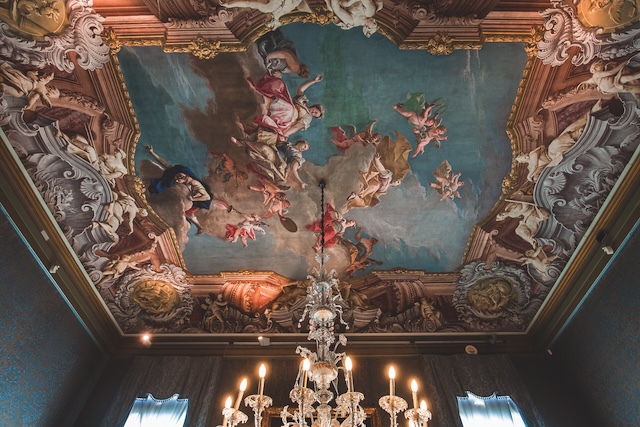
A stunning palace on the Grand Canal in Venice, Ca’ Rezzonico now houses the Museum of 18th Century Venice (Museo del Settecento Veneziano). This museum offers a fascinating glimpse into the opulent lifestyles of Venetian nobility during the 18th century, with its richly decorated rooms, period furniture and extensive art collections.
The main floor (piano nobile) includes a series of lavishly decorated rooms such as the Grand Ballroom, the Throne Room and the Tapestry Room. These rooms are furnished with period furniture and adorned with frescoes by artists such as Giovanni Battista Crosato and Giovanni Domenico Tiepolo.
The museum houses an extensive collection of 18th-century Venetian art, including paintings by Canaletto and Tiepolo. The paintings vividly portray Venetian society, daily life and grand historical events. The rooms are filled with authentic 18th-century furniture, tapestries and decorative arts, offering a comprehensive view of the era’s interior design and craftsmanship. One unique feature of Ca’ Rezzonico is the reconstructed apothecary, showcasing a complete 18th-century pharmacy with original furnishings and equipment.
The article above appears in the October 2025 issue of the print version of Fra Noi. Our gorgeous, monthly magazine contains a veritable feast of news and views, profiles and features, entertainment and culture.
To view a sample copy, click here.
To subscribe, click here.
